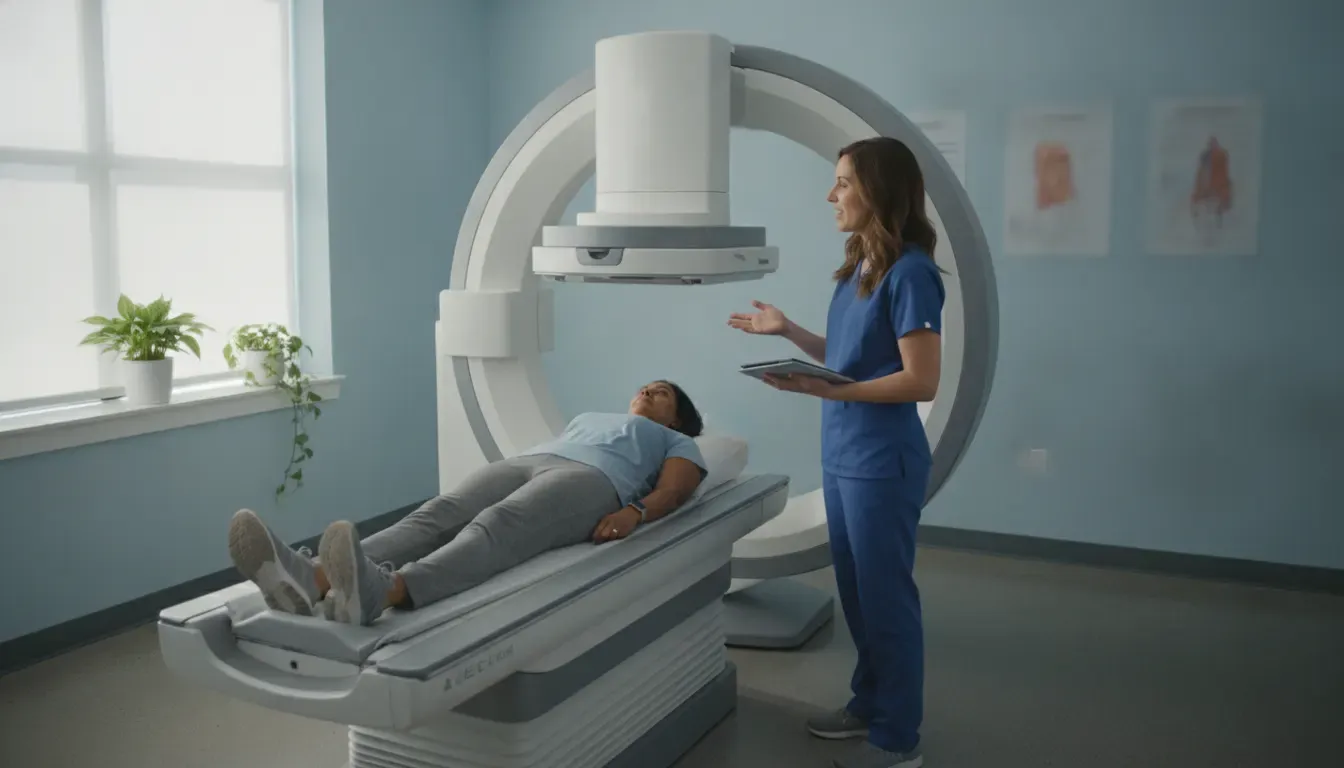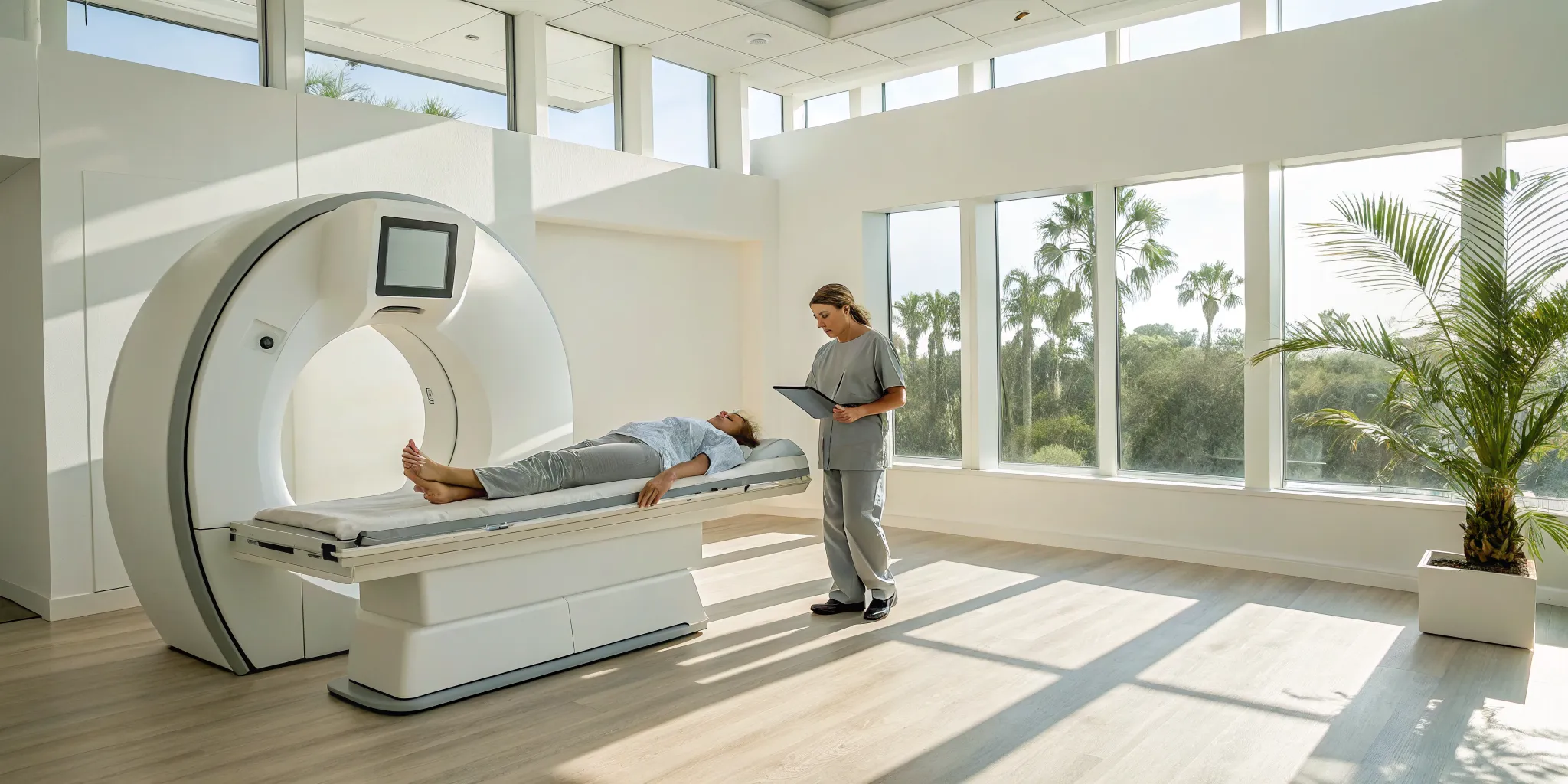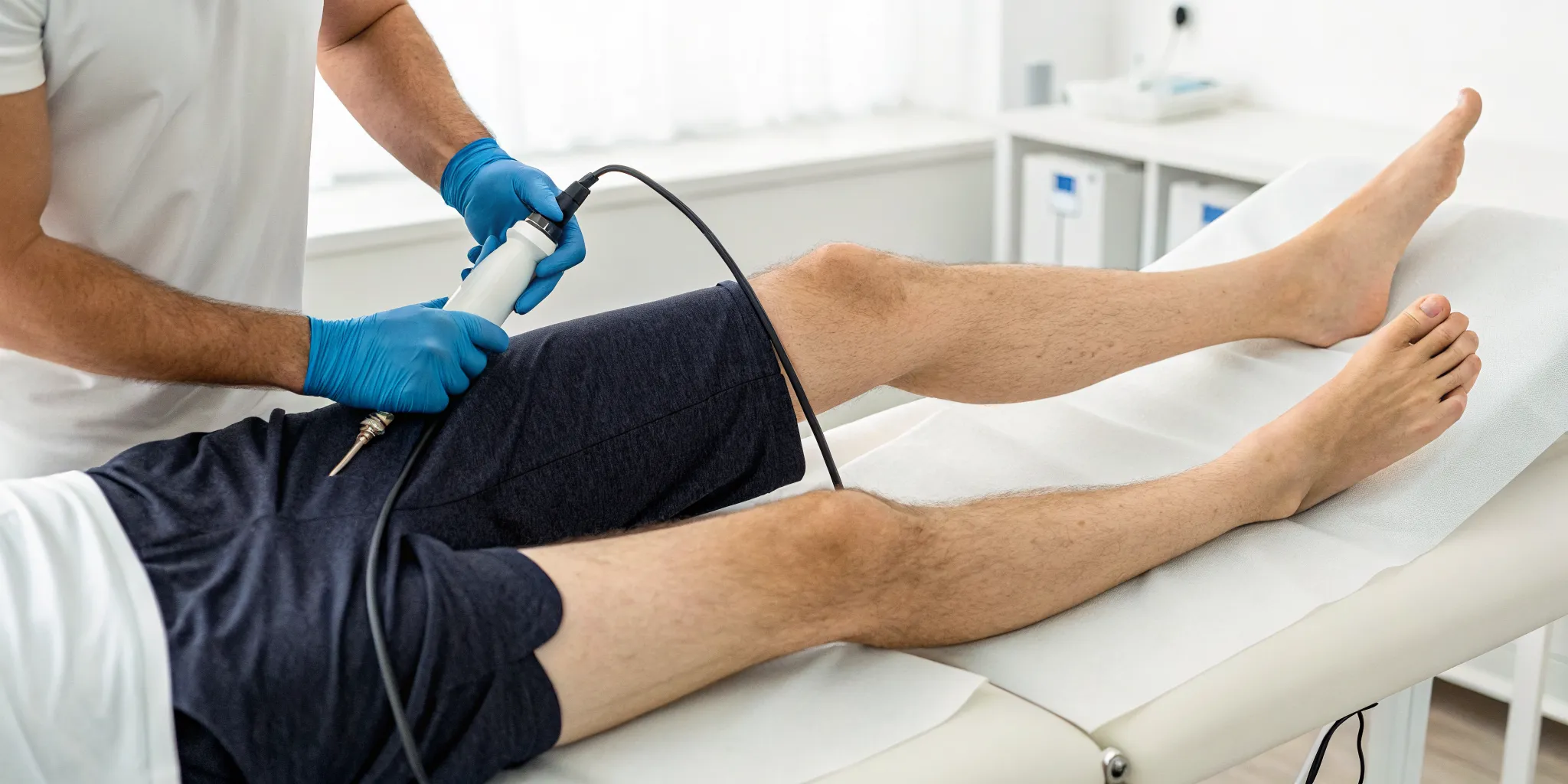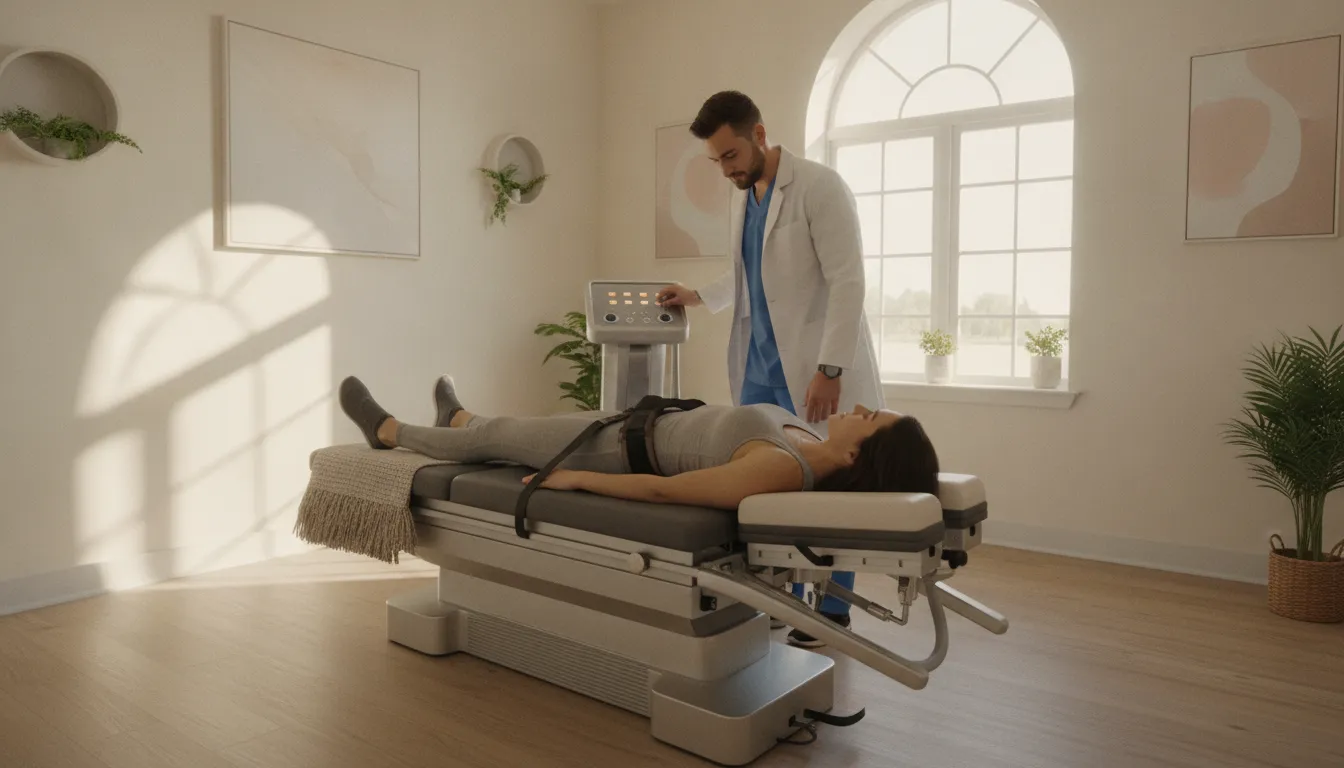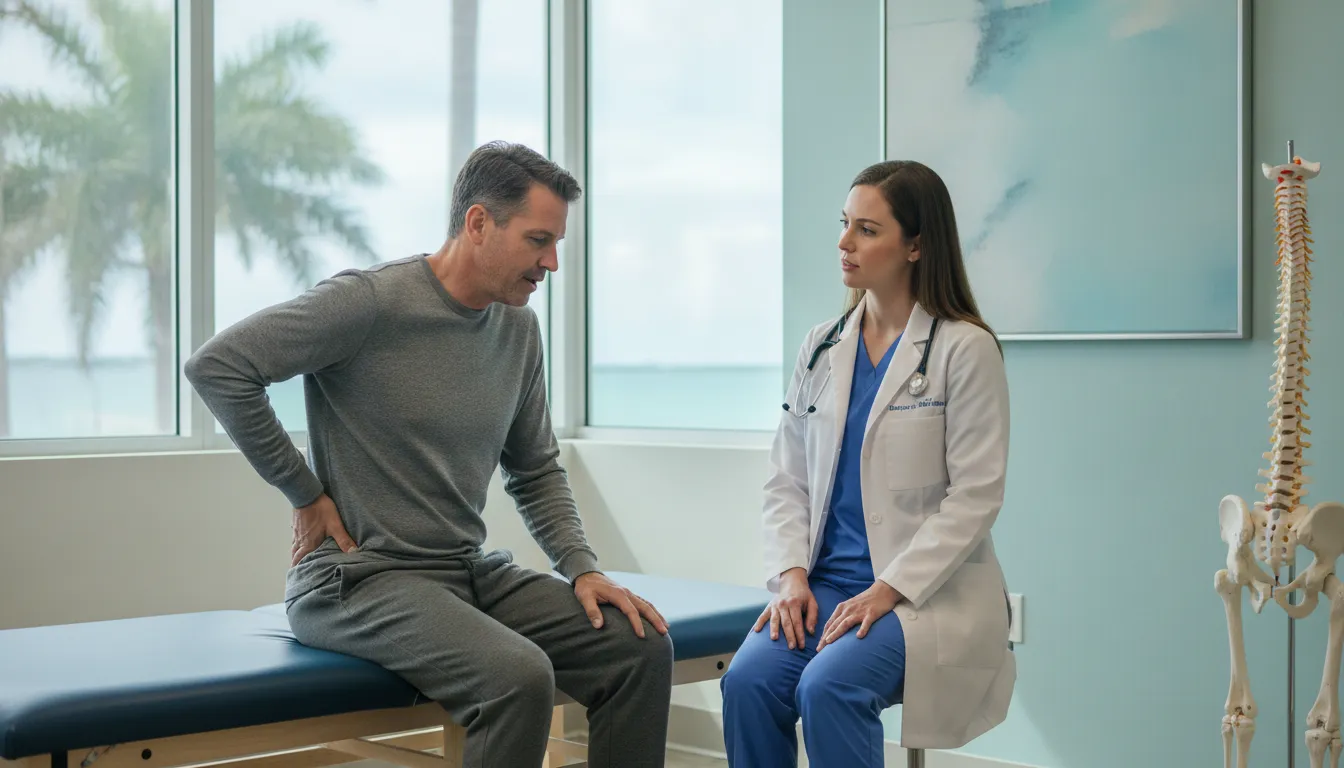
A herniated disc on an imaging report does not, by itself, explain every symptom or determine which care is appropriate. The more useful starting point is to connect the scan with your pain pattern, strength, sensation, movement, and daily limitations.
Spinal decompression therapy for herniated disc concerns may be worth discussing when a focused evaluation supports the approach. But candidacy depends on your history, examination, relevant imaging, and a clear plan for monitoring progress.
Many people experience back or leg pain, tingling, numbness, or weakness when a disc affects nearby nerves, while some disc changes cause no symptoms at all. That is why a Tampa Bay consultation should focus on the person, not just the scan. The sections below explain how disc findings can change the evaluation, what imaging may add, and which questions can help you make an informed decision.
What Does a Herniated Disc Change About Spinal Decompression Therapy?
A herniated disc may be relevant to spinal decompression therapy when its location and relationship to nearby nerves match the person's symptoms. The scan label alone does not establish candidacy; a focused evaluation must connect the image, symptom pattern, and physical findings.
A disc is a soft tissue cushion between the bones of the spine. When that cushion bulges outward, it can become painful if it presses on a nerve. The pressure may be associated with lower back pain, numbness or tingling, muscle weakness, or pain traveling through the buttock, hip, or leg when the sciatic nerve is involved. These symptoms can vary by the disc's location and the nerve affected.
That relationship matters because a herniated disc does not automatically explain every symptom. Some people have a herniated disc without symptoms at all, while others have symptoms that do not closely match the location or severity of an imaging finding. The NHS notes that many people may not know they have a slipped disc because it causes no symptoms: learn more about slipped disc symptoms.
Why the imaging label is only one part of the decision
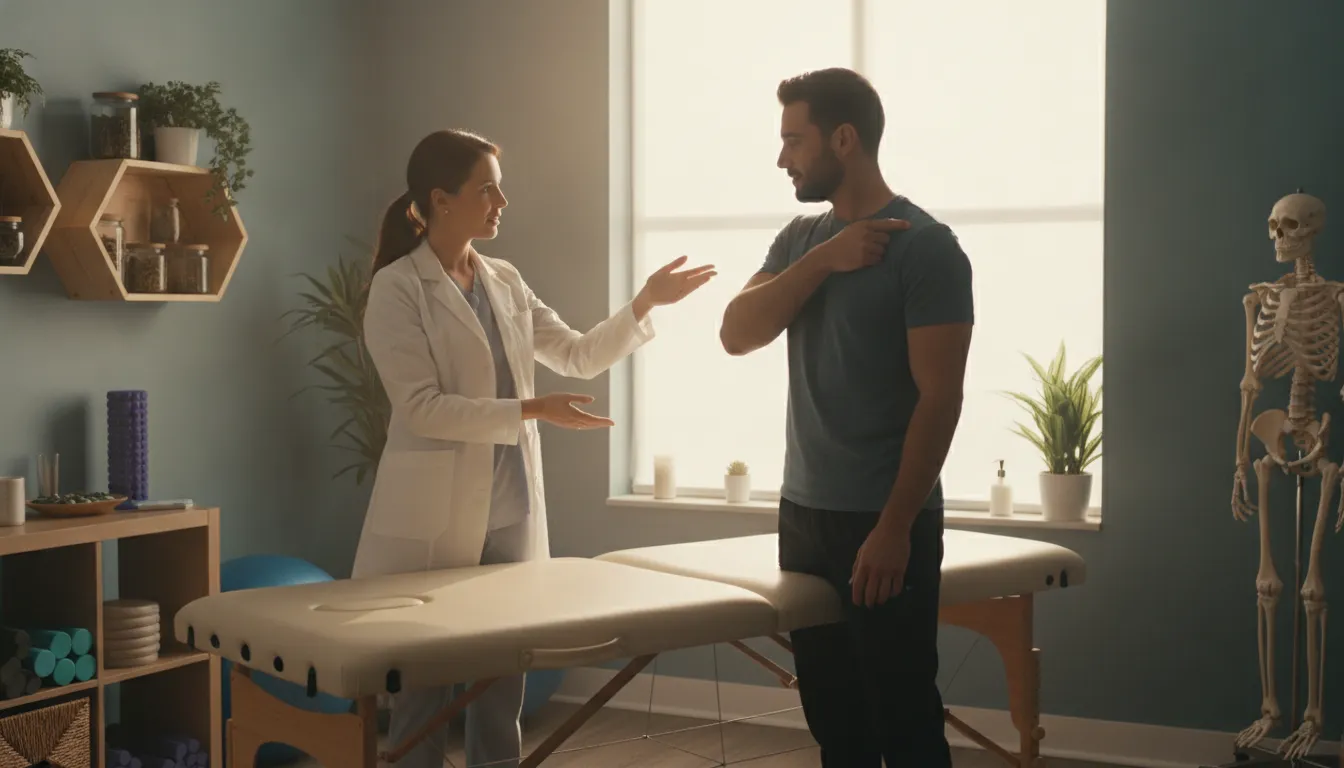
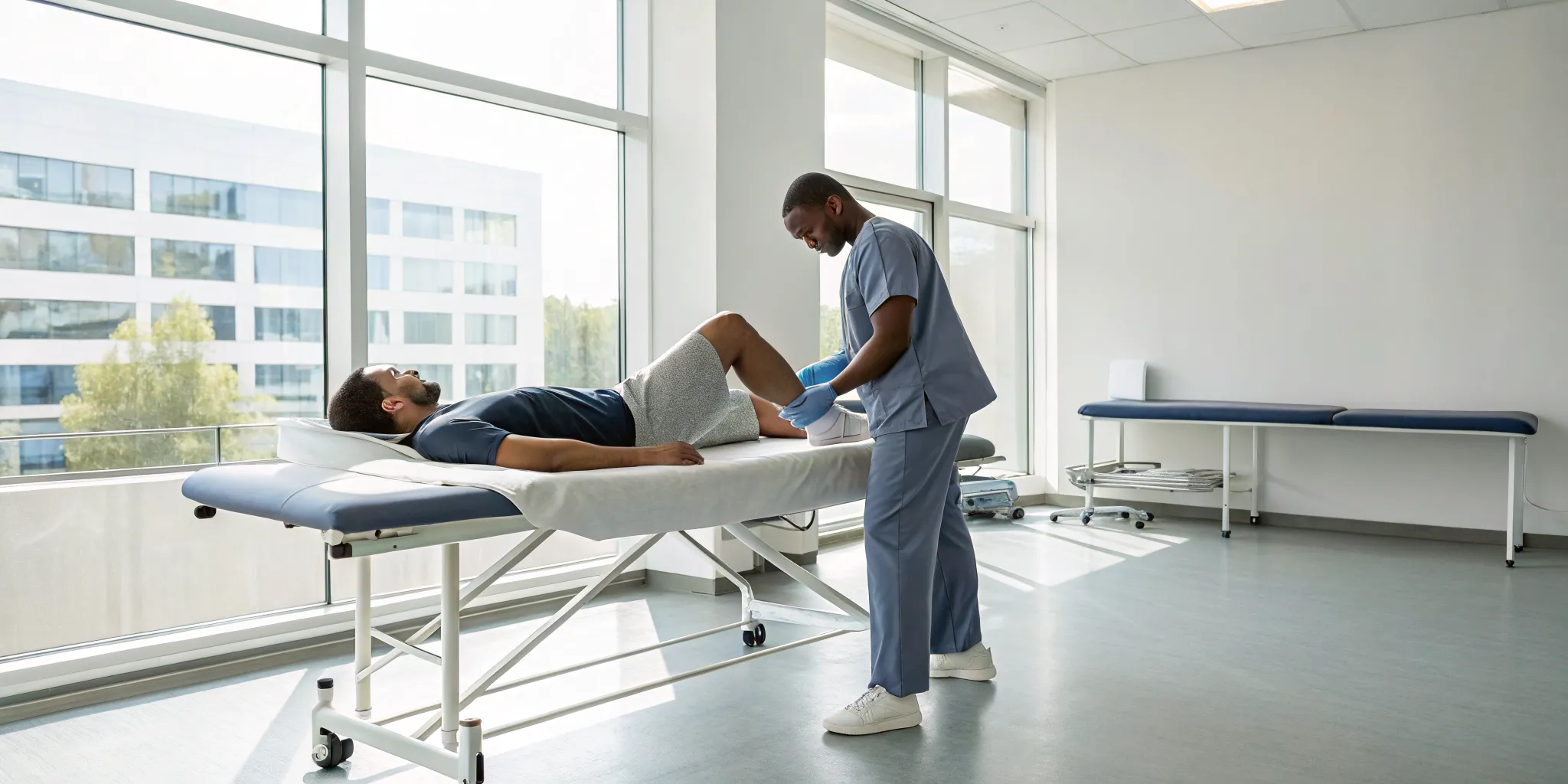
A clinician may begin with your history and a physical examination. The assessment can include reflexes, muscle strength, walking, and sensation. For many people, this information helps establish the clinical picture. Imaging or nerve testing may be considered when another cause is possible or when the evaluation needs to identify which nerves are affected.
In practical terms, candidacy depends on more than whether an MRI report includes the words "herniated disc." The duration and distribution of symptoms, functional limitations, neurological findings, prior care, and overall health all belong in the conversation. Spinal decompression therapy should therefore be discussed as one evaluated option within personalized Physical Medicine care, not as an automatic response to an imaging result.
Which Symptoms and Findings Should Shape the Evaluation?
The symptom pattern, changes in strength or sensation, and effect on daily function should shape the conversation more than an imaging label alone. A careful evaluation helps determine whether spinal decompression therapy for herniated disc is worth discussing and whether another form of care should take priority.
Describe where symptoms begin and where they travel. Disc-related symptoms may include lower-back pain, leg pain linked with sciatica, numbness, tingling, difficulty bending or straightening, or muscle weakness. Note whether symptoms are constant or intermittent, what activities change them, and whether they are affecting walking, sleep, work, exercise, or other normal routines. This detail gives a clinician a clearer picture of function rather than reducing the discussion to a scan result. Some herniated discs cause no symptoms at all, so a finding on imaging does not automatically explain every complaint. Review symptom patterns described by the NHS.
Strength changes deserve particular attention. Progressive or significant weakness in the legs is a red flag that calls for urgent medical assessment, rather than waiting to see whether a conservative option is appropriate. Current spine-care recommendations favor conservative care first when serious neurologic deficits are absent, but that decision depends on the findings of an individual assessment. WFNS recommendations on conservative care and neurologic findings provide useful clinical context.
Seek urgent medical assessment if back symptoms occur with new numbness around the saddle area, changes in bladder or bowel control, inability to urinate, or substantial loss of sensation in one or both legs. These signs need prompt attention and should not be folded into a routine treatment discussion. The goal of the consultation is not simply to select a device or technique. It is to clarify the symptom pattern, identify relevant neurologic findings, understand how function has changed, and decide what next step is appropriate for your situation.
How Do Imaging and Nerve Tests Guide the Conversation?
Imaging and nerve testing can add useful detail, but they are interpreted alongside your symptoms and physical findings. The goal is to connect a scan or test result with how you move, feel, and function rather than make a decision from an image alone.
A focused visit usually begins with your history and a physical examination. Your clinician may ask when symptoms began, where they travel, which movements change them, and whether your daily activities or walking have changed. The exam may include reflexes, muscle strength, walking, and sensation such as response to touch, pinpricks, or vibration. These findings help show whether a nerve may be irritated or whether another explanation deserves attention. For many people, the history and examination provide substantial direction before additional testing is considered.
An X-ray has limits in this setting. It cannot show a herniated disc, although it may help rule out other causes of symptoms, including other structural or spinal alignment concerns. An MRI provides a clearer view of soft tissue. It may help confirm the location of a disc herniation and show which nerves are affected. Even then, the finding needs to match the symptom pattern and examination.
Additional nerve testing may be considered when the clinical picture is unclear or when the clinician needs more detail about nerve involvement. An electromyogram, or EMG, measures electrical activity in muscles and can help indicate which nerves may be affected. Testing is not automatically needed for every person with disc-related pain. Its value depends on the question the clinician is trying to answer.
Bring prior imaging reports and, when available, the actual images to your appointment. A practical overview of non-surgical herniated disc treatment can also help you prepare for a more focused conversation about findings, options, and appropriate next steps. Mayo Clinic provides additional detail on the clinical evaluation, imaging, and nerve testing process.
Review the clinical evaluation and testing guidance from Mayo Clinic.
How Strong Is the Evidence for Spinal Decompression Therapy for Herniated Disc?
The evidence for spinal decompression therapy for herniated disc is promising in some small studies, but it is not definitive. Results depend on the patient group, the comparison treatment, the protocol, and the outcomes being measured. So a study result should inform a clinical conversation rather than guarantee an individual outcome.
One 2022 randomized study included 60 people with subacute lumbar herniated discs. Thirty received nonsurgical decompression and 30 received a sham protocol without force. The decompression group completed 10 sessions over eight weeks. Researchers measured lower-back and leg pain, function using the Korean Oswestry Disability Index, and changes in the disc herniation index on MRI three months after treatment.
In that study, the decompression group had lower reported lower-leg pain at two months and lower disability scores at two and three months. The average change in the MRI herniation index also differed between groups: -27.6% in the decompression group compared with -7.1% in the control group. About 26.9% of the decompression group had more than a 50% reduction in the index, compared with none of the control group. These findings are worth noting, but the sample was small, the participants had subacute lumbar presentations. And the specific treatment schedule may not match care delivered in every clinical setting. The study measured a radiographic index, which should not be treated as a stand-alone measure of pain, function, or readiness to return to activities. You can review the randomized study's methods and measured outcomes for more detail.
A separate randomized trial included 48 people with lumbar-disc-related low-back pain. It compared conventional motorized traction with nonsurgical decompression, with 20 sessions over six weeks for each group. Researchers tracked pain, disability, quality of life, mood, and global response. Both groups improved on several measured scores after treatment, but there was no significant difference between them. In other words, this trial found that nonsurgical decompression was not superior to conventional motorized traction on the reported outcomes.
The two studies also used different sample sizes, schedules, comparison protocols, and outcome measures. Those differences make direct comparison difficult and limit how broadly the findings can be applied. A responsible plan considers the evidence alongside the symptom pattern, examination, imaging when appropriate, goals, and progress over time. It should also leave room to reconsider the approach if function or symptoms are not moving in the expected direction.
What Alternatives and Progress Measures Should You Discuss?
A thoughtful plan may combine activity modification, clinician-directed pain management, rehabilitation, or a discussion of decompression based on your symptoms and examination. Progress is best judged by changes in pain, function, and daily activity rather than by a single scan or treatment label.
Conservative care is often considered first when there are no serious neurologic findings. A review from the WFNS Spine Committee describes activity modification, clinician-guided pain management, and physical therapy as options that may be combined for lumbar disc herniation. The right mix depends on your history, examination, goals, and response over time.
| Planning element | What it may involve | What to monitor |
|---|---|---|
| Evaluation | Reviewing symptoms, function, strength, sensation, reflexes, and relevant imaging or nerve testing. | Whether findings match the symptom pattern and whether the plan remains appropriate. |
| Conservative care | Modifying aggravating activities, clinician-directed pain management, and rehabilitation when appropriate. | Walking tolerance, sitting or standing tolerance, sleep, and ability to return to important daily activities. |
| Decompression discussion | Considering spinal decompression as one possible option after reviewing candidacy, alternatives, and evidence limits. | Changes in symptoms and function, without assuming that imaging change or treatment response is guaranteed. |
| Progress monitoring | Using consistent symptom and function measures at follow-up visits. | Pain intensity, disability, movement, daily function, and any new or worsening neurologic changes. |
One randomized trial found improvement in both conventional traction and nonsurgical decompression groups, with no significant difference between them on reported outcomes. That finding supports an open discussion rather than treating decompression as automatically superior. A clinician can also help determine whether chiropractic care for herniated disc pain or other rehabilitation approaches fit your situation.
To explore options within Physical Medicine care, bring your symptom timeline, previous care, imaging reports, and specific activity goals to the conversation.
What Should You Bring to a Tampa Bay Spinal Consultation?
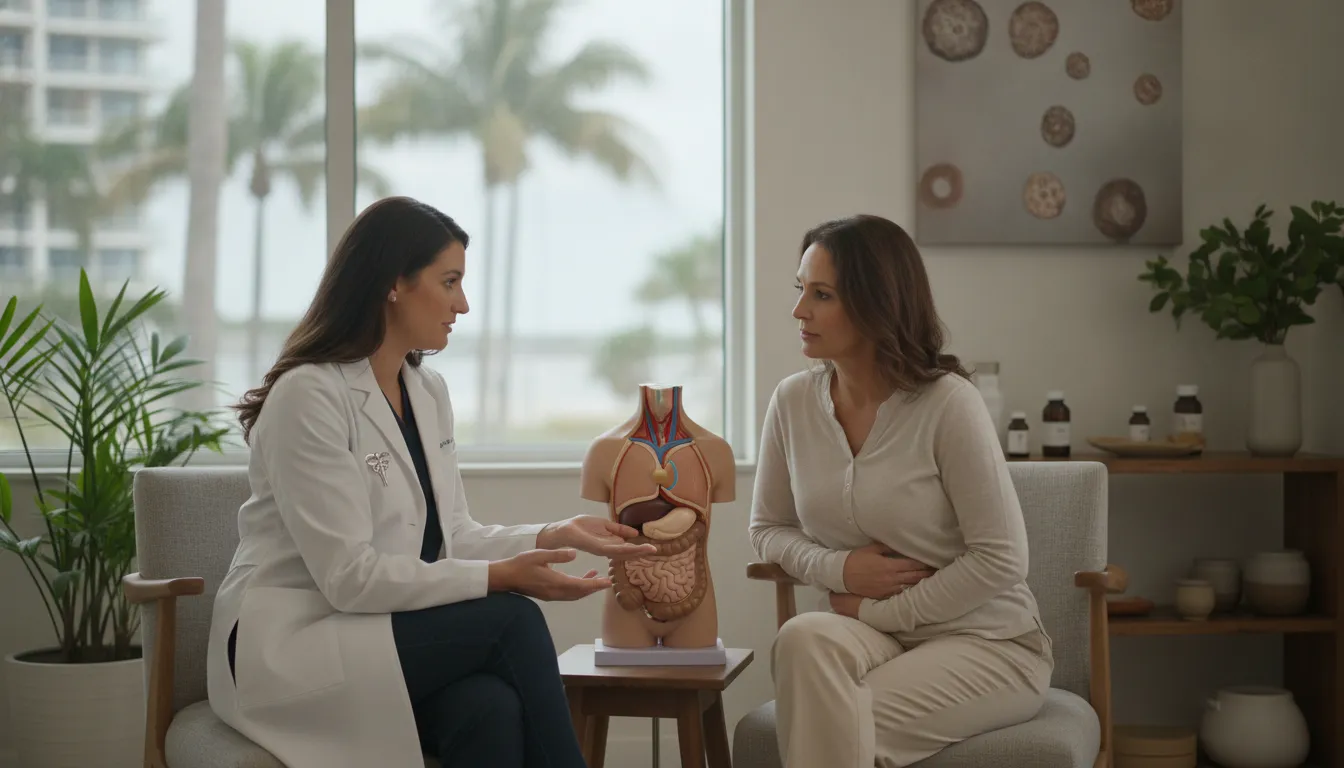
Bring a clear record of your symptoms, prior care, and available imaging, along with realistic goals and questions about fit. A focused consultation should connect your day-to-day experience with an individualized evaluation rather than assume that one approach suits every person.
Your symptom and care history
Note when your back or leg symptoms began, what activities change them, and whether they affect walking, sleep, work, or exercise. Describe changes in sensation, strength, or coordination as accurately as you can. Also bring a concise list of previous approaches, such as chiropractic care, rehabilitation, or other clinical care, and explain what helped, what did not, and what you could not tolerate. This context helps the clinician understand the problem you are trying to solve and set useful measures for follow-up.
Imaging and examination information
Bring reports and image files from X-rays, MRI scans, or other testing when available. An X-ray cannot show a herniated disk, although it may help rule out other causes. An MRI can help confirm the location of a herniated disk and show which nerves may be affected. Imaging is only one part of the discussion. A physical examination may include checks of reflexes, muscle strength, walking, and sensation. Nerve testing may be considered when the clinician needs more information about affected nerves. These evaluation principles are summarized in the Mayo Clinic overview of herniated disk diagnosis.
Questions about fit, alternatives, and monitoring
Ask how your symptoms, examination findings, and imaging would influence a discussion of spinal decompression therapy for herniated disc concerns. Ask what alternatives may be reasonable, what limitations are known, and how progress would be measured. Useful measures might include walking tolerance, activity levels, sleep, or symptom changes. You can also review factors that may influence candidacy and the evidence and limitations of spinal decompression.
If the approach and communication style feel aligned, the next step is to request a Tampa consultation and discuss your history with the care team. A consultation is an opportunity to understand your options, not a promise that a particular treatment will be recommended.
Discuss your herniated disc evaluation with Ascend Functional Health
Frequently Asked Questions
Will spinal decompression therapy fix a herniated disc?
It may help reduce symptoms and improve function for some patients, but it cannot be presented as a guaranteed repair. A focused evaluation should consider the disc findings, nerve symptoms, overall health, and response over time.
Does spinal decompression work for a herniated disc?
Evidence suggests possible benefits, but results are not universal. One randomized study found changes in pain, function, and MRI findings after treatment, while its limited size and specific patient group mean the findings should be applied cautiously. Review the study details.
What are the downsides of spinal decompression therapy?
Potential downsides include cost, time commitment, temporary discomfort, and continuing treatment without clear progress. A reasonable plan defines measurable goals and a reassessment point before a longer course is considered.
Is spinal decompression therapy safe?
Safety depends on the individual diagnosis and screening. A clinician should review symptoms, history, examination findings, and imaging when appropriate, then identify situations where another form of evaluation or care is more suitable.
Is spinal decompression a permanent fix for a herniated disc?
No treatment should be described as a permanent fix for every person. Progress can depend on the underlying disc condition, nerve irritation, movement demands, and whether the plan addresses contributing factors and tracks function over time.
Ready to Discuss Your Next Step?
A focused conversation can help you review your symptoms, prior care, imaging, goals, and whether spinal decompression therapy fits your situation. Ascend Functional Health can help you understand the evaluation process and consider an appropriate Physical Medicine plan for your needs.
This article is educational and not medical advice. Speak with a qualified clinician before making decisions about your health.
Request a Tampa consultation through Ascend Functional Health