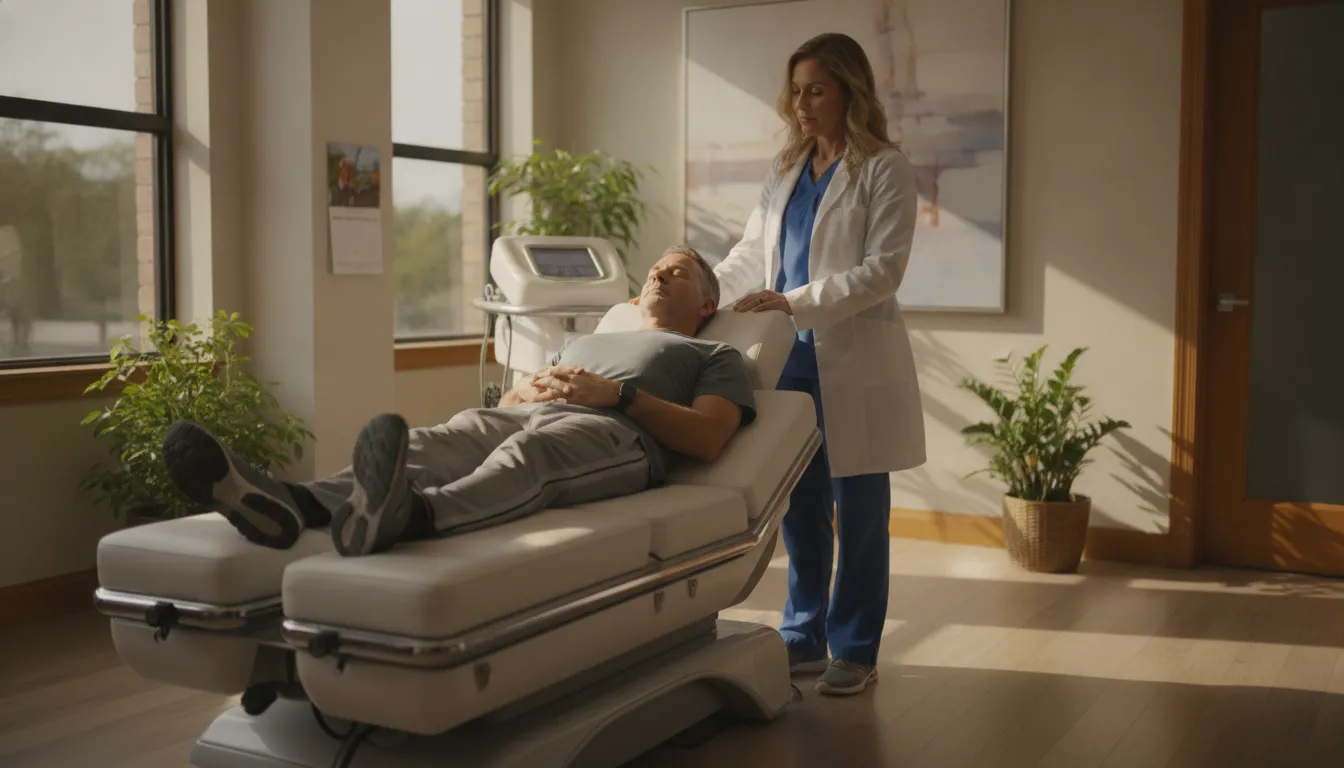
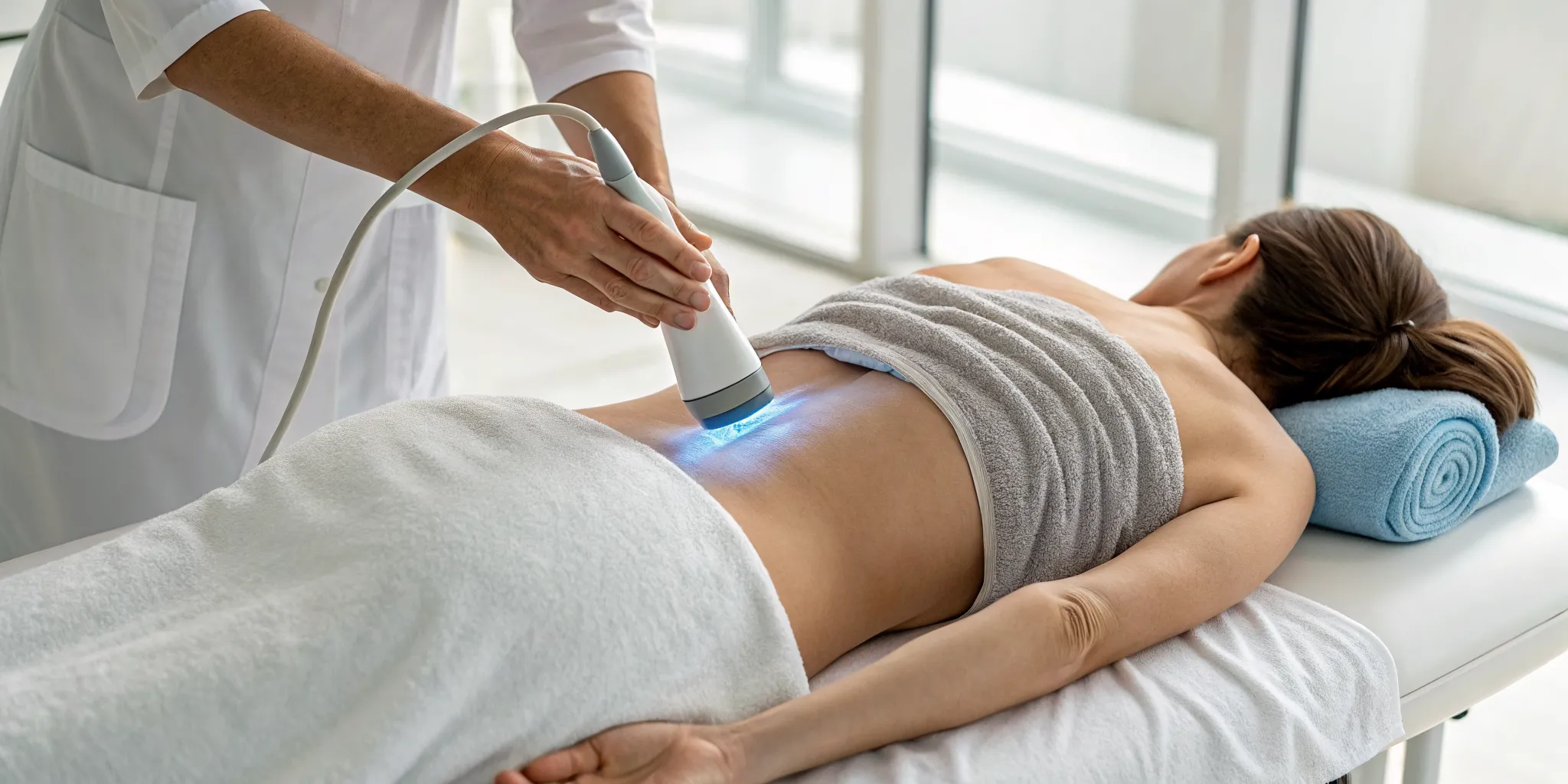
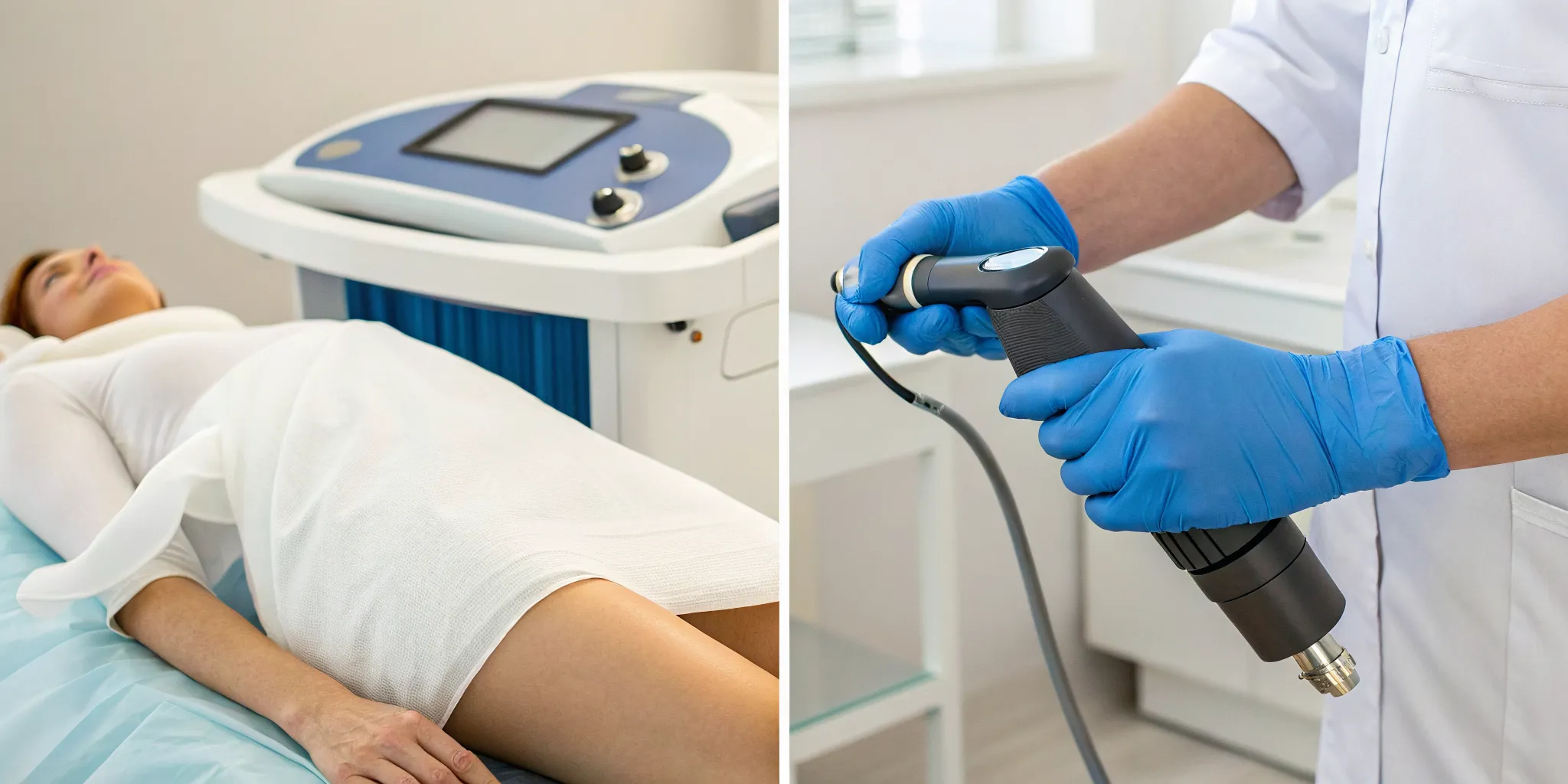
A search for a dexa scan near me often returns a mix of imaging-center listings, fitness studios, and clinic pages, and they do not all offer the same test. In Tampa Bay, the useful first step is to confirm the location performs the protocol you were asked about, then plan who will explain the report. Ascend offers DEXA scans in Tampa as one local option for bone density and body composition.
What Should a DEXA Scan Near Me Search Actually Confirm?
Confirm three things before you book: the address, the protocol, and who reviews the report. A nearby listing is not the same as a confirmed appointment.
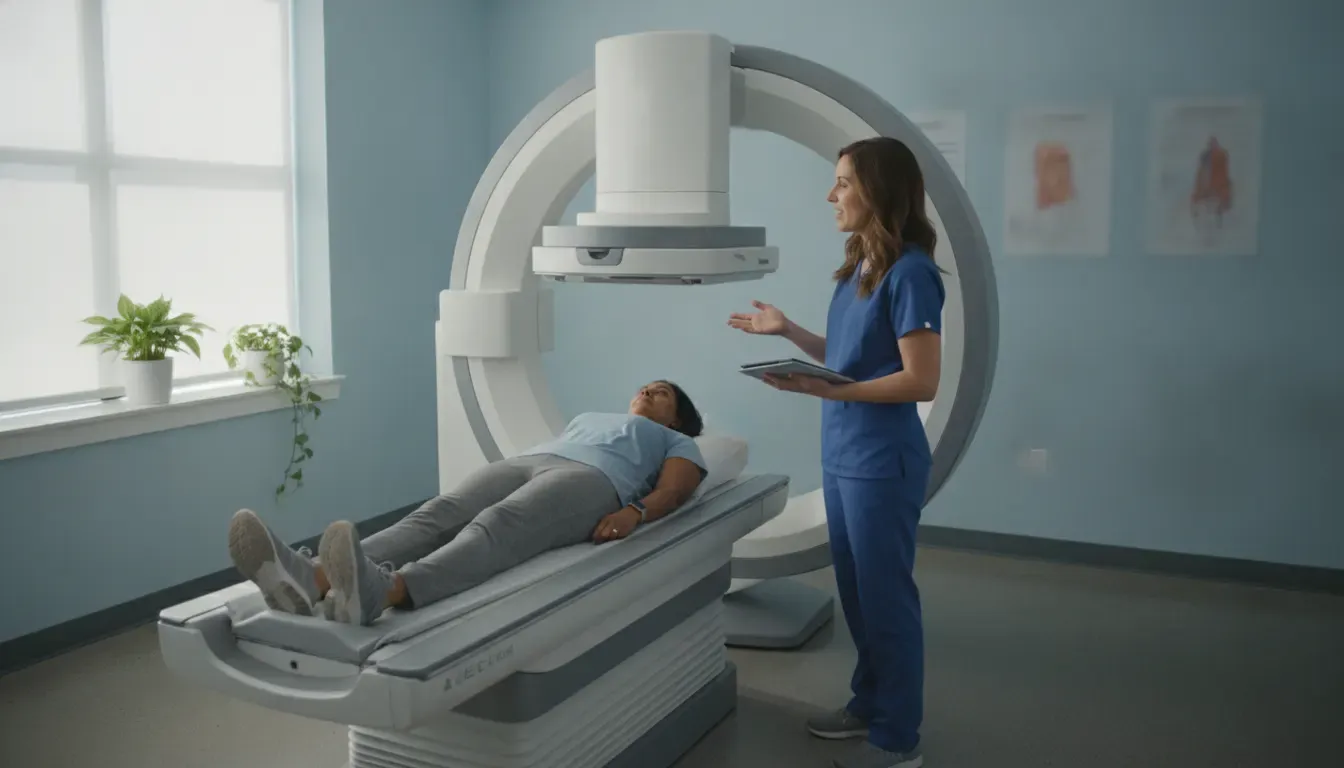
DEXA, also written DXA, uses a low-dose X-ray method. The National Institute of Arthritis and Musculoskeletal and Skin Diseases describes central DEXA as the common test for bone mineral density, usually at the hip and spine. A whole-body visit can be a different protocol. It may report fat mass, lean mass, and regional measurements instead of, or along with, a bone-density classification. Two Tampa Bay pages can both say "DEXA" and still answer different questions.
Ask the location these questions in plain terms.
- Is this the Tampa Bay address where the scan is performed, and is that service open for scheduling now?
- Is the visit a hip-and-spine bone-density test, a whole-body composition scan, or both?
- Do you need an order, and what must that order include?
- Who receives the report, and who will walk through it with you?
Write down the person's name and the date of the answer. A directory row for another city, or a page that has not been updated, does not establish local access. If staff cannot confirm the protocol, pause and ask the clinician who raised testing before you hold a time slot.
Which DEXA Scan Near Me Details Separate One Tampa Bay Option From Another?
Separate options by protocol, report access, and follow-up, not by how close the pin looks on a map. The closest listing can still be the wrong test.
Ascend's DEXA scans page describes a Tampa visit used as a baseline for functional medicine and longevity conversations. The page says a scan can cover lean muscle by region, total and regional fat, and visceral fat. It also lists bone mineral density, T-score and Z-score classification, and the android-to-gynoid fat ratio. That is a specific local offer. It is not a promise that every imaging center nearby uses the same report.
| What to compare | Question to ask | Why it changes the choice |
|---|---|---|
| Protocol | Is this hip and spine bone density, whole-body composition, or both? | The report answers a different question depending on the protocol. |
| Local access | Is the scan performed at this Tampa Bay address, and can I book it now? | A listing can name a service the site does not currently schedule. |
| Order | Is an order required, and who should write it? | Booking before the order is clear can waste the trip. |
| Report handoff | Who receives the file, and when is it reviewed? | A completed scan still needs a person who will explain it. |
| Repeat visits | Can a later scan use the same machine and software for comparison? | Switching systems can make a trend harder to read. |
For the broader Tampa explainer of how body composition differs from bone density, read DEXA Scan Tampa: Body Composition and Bone Health. Use this page for the local choice. Use that one when you want the measurement differences spelled out. If the visit itself is the open question, the DEXA appointment guide covers preparation and the day of the scan.
Which Report Terms Should You Ask a Clinician to Explain?
Ask what each number is for, which reference group it uses, and what it does not decide. A score without that context is easy to misread.
On a bone-density report, NIAMS defines the T-score as the difference between your bone mineral density and that of a healthy young adult. The score is how that result is reported for a woman after menopause, or a man age 50 or older.
NIAMS describes the ranges this way. A T-score of -1.0 or higher is consistent with healthy bone. A score from -1.0 to -2.5 is called osteopenia, a milder loss of density. A score of -2.5 or lower might mean osteoporosis. The same source says that risk rises about 1.5 to 2 times with each 1-point drop. Those ranges are a reason to ask questions, not a label to apply to yourself.
A Z-score answers a different comparison. It sets your result next to healthy people of your age, sex, and ethnicity, and it is the score used for younger adults and for children. NIAMS says a Z-score of -2.0 or less means low density for that peer group. That finding can point toward medicines or conditions other than age alone. Ask which score is on your report before you compare it with a number you read online.
A body-composition report uses a different vocabulary. Ask which of these are actually on your printout.
- Total and regional fat mass, including how trunk fat compares with the limbs.
- Visceral fat, the fat around abdominal organs, which is not the same number as the fat you can pinch.
- Lean mass by region, such as arms, legs, and trunk. Lean mass is not the same thing as strength.
- Android-to-gynoid ratio, a comparison of fat carried around the middle with fat carried at the hips.
Bring the printout, or ask the clinic to send it ahead, and ask the reviewer three direct questions. What was this protocol built to answer? Which score applies to your age and sex? What, if anything, should happen next? A single number does not choose a treatment. If you want a fuller walk-through of a composition printout, use DEXA body composition results after the visit, not instead of the review.
How Does a Tampa Bay DEXA Visit Fit a Care Conversation?
A local scan is most useful when someone can connect the report to your history, goals, and the reason testing came up. The scan is a measurement. The conversation decides what the measurement is for.
Ascend Functional Health is a Tampa Bay practice organized around Physical Medicine, Functional Medicine, and Regenerative Medicine. On the DEXA page, the practice describes scans as a baseline for functional medicine and longevity protocols, and as a way to track change over time.
The same page names groups the practice recommends the scan for. Adults over 40 are one group. People on a weight-management or GLP-1 protocol who want to watch muscle are another. So are people with a family history of osteoporosis, athletes tracking composition, and Ascend Total Care members. Those are practice recommendations. They are not a rule that everyone in those groups needs a scan.
Screening advice from outside the practice is narrower. The U.S. Preventive Services Task Force, as summarized by NIAMS, recommends bone-density testing for women over 65. It also recommends testing for younger postmenopausal women whose bone-health risk is higher. NIAMS notes that research is not yet strong enough for the Task Force to recommend routine screening for men. Anyone worried about bone health should talk with a clinician.
A body-composition goal is a separate reason. Someone checking lean mass during weight loss may not need the same bone-density workup. Say which question you are trying to answer when you call, so the visit matches it.
Use the scan conversation to ask what an evaluation at Ascend would include, which records help, and whether Functional Medicine or another service fits the question you came in with. Recommendations depend on individual circumstances. A scan does not, by itself, set a plan.
What Should You Do When a DEXA Scan Near Me Listing Looks Wrong?
Treat a mismatched listing as a prompt to verify, not as proof that no local option exists. A wrong city, an old service name, or a page that will not say which protocol it runs is a reason to call, not a reason to guess.
Check the address against the neighborhood you can actually reach. Tampa, Wesley Chapel, and St. Petersburg can all appear in one search, and a result that looks close on a phone map may still be a long drive. Ask whether the scan happens at that building. Some pages describe a service that is scheduled at a different office.
Then check the offer against your question. A fitness-oriented body-composition visit may not include a hip-and-spine bone-density classification. A clinic bone-density test may not report visceral fat or lean mass by limb. Neither result is a bad test. Each one is a bad match if it is not the test you were sent to get.
If a site will not confirm the protocol, the order rule, or who reads the report, move on and write down what was unclear. Bring that note to the clinician coordinating your care, or to a Tampa practice that states its DEXA offer in writing. Ascend's page does that for bone density and body composition. You can compare that written offer with what another location tells you on the phone.
Price and how to save on a scan are covered in separate guides, so this article does not repeat them. Ask the location you choose what the visit costs and how payment works. A payment question belongs with the office you plan to use, not with a general article.
How Can You Keep the Next Step Practical?
Leave the search with one next action: confirm a Tampa Bay protocol, clarify the order, or book time to review a report you already have. Do not try to settle all three in one phone call.
- Write why a DEXA scan came up and who suggested it.
- Call the location and confirm the address, the protocol, and whether you can book it.
- Ask whether an order is required and what the report will include.
- Collect prior reports if a comparison is the point of this visit.
- Name the person who will explain the result and how you will reach them.
If the location cannot confirm the protocol, ask the clinician who raised testing before you book elsewhere. A broader question deserves its own conversation. Fatigue, a change in body composition, or a bone-health worry may sit inside a larger history. A consultation can sort out whether a scan belongs in the next step at all.
Discuss DEXA scan fit with Ascend
Frequently Asked Questions
Does Ascend Functional Health offer a DEXA scan near me in Tampa?
Yes. Ascend's DEXA scans page describes Tampa visits for bone density and body composition, including regional lean mass, visceral fat, and T-score and Z-score reporting. Confirm the current protocol and scheduling on that page or by contacting the practice, since availability can change.
How do a T-score and a Z-score differ?
NIAMS describes a T-score as a comparison with a healthy young adult, used for postmenopausal women and men age 50 or older. A Z-score compares you with people of your age, sex, and ethnicity, and is the result used for younger adults. Ask a clinician which score is on your report and what it means for you.
Will a nearby DEXA listing include visceral fat and lean mass?
Not always. A hip-and-spine bone-density test and a whole-body composition scan are different protocols. Ask the location which measurements are on the report before you book. So you do not expect visceral fat or regional lean mass from a test that does not include them.
Can I read a DEXA report without a clinician?
You can learn the terms, but you should not diagnose yourself from a cutoff. NIAMS ties T-score ranges to osteopenia and osteoporosis and still points readers back to their clinician for what to do next. Bring the report to the person coordinating your care and ask what applies to your history.
What if I already have a DEXA report from another city?
Bring it. Ask whether a new Tampa Bay scan can be compared with it, and whether the machines and software are similar enough for a trend to mean anything. A prior report is still useful context even when a direct numeric comparison is not appropriate.
This article is educational and is not medical advice. Talk with your clinician before you act on health information.