Think of your body like a building. Your core is the foundation, and your spine is the central support beam. If that foundation is weak or unstable, the entire structure is at risk. Small cracks appear, things start to shift, and eventually, you feel it as pain and stiffness. This is why understanding the role of core stability in long-term spine health is so crucial. It’s not just about exercise; it’s about reinforcing your body’s foundational support system. By strengthening your core, you create a solid base that protects your spine from the daily stresses of life.
Key Takeaways
- Your core is more than just your abs: True stability comes from strengthening the entire network of muscles around your torso, back, and hips. This creates a supportive brace for your spine, protecting it from strain and improving your posture.
- Prioritize quality movement over quantity: A sustainable routine with proper form is more beneficial for your spine than infrequent, intense workouts. Focus on control with foundational exercises to build functional strength that supports you in daily life.
- Recognize when foundational exercises are not enough: If you experience persistent pain, numbness, or your progress stalls, it may signal a deeper issue. Seeking a professional assessment is the best way to identify and address the root cause of your discomfort.
How a Stable Core Leads to a Healthier Spine
When you hear the word “core,” you probably picture chiseled six-pack abs. While that’s part of it, the reality is so much more complex and vital for your overall health. Your core is the central pillar that supports your entire body, and keeping it stable is one of the best things you can do for your spine. A stable core doesn't just help you look more toned; it acts as a natural brace, protecting your back from strain and injury during everyday movements.
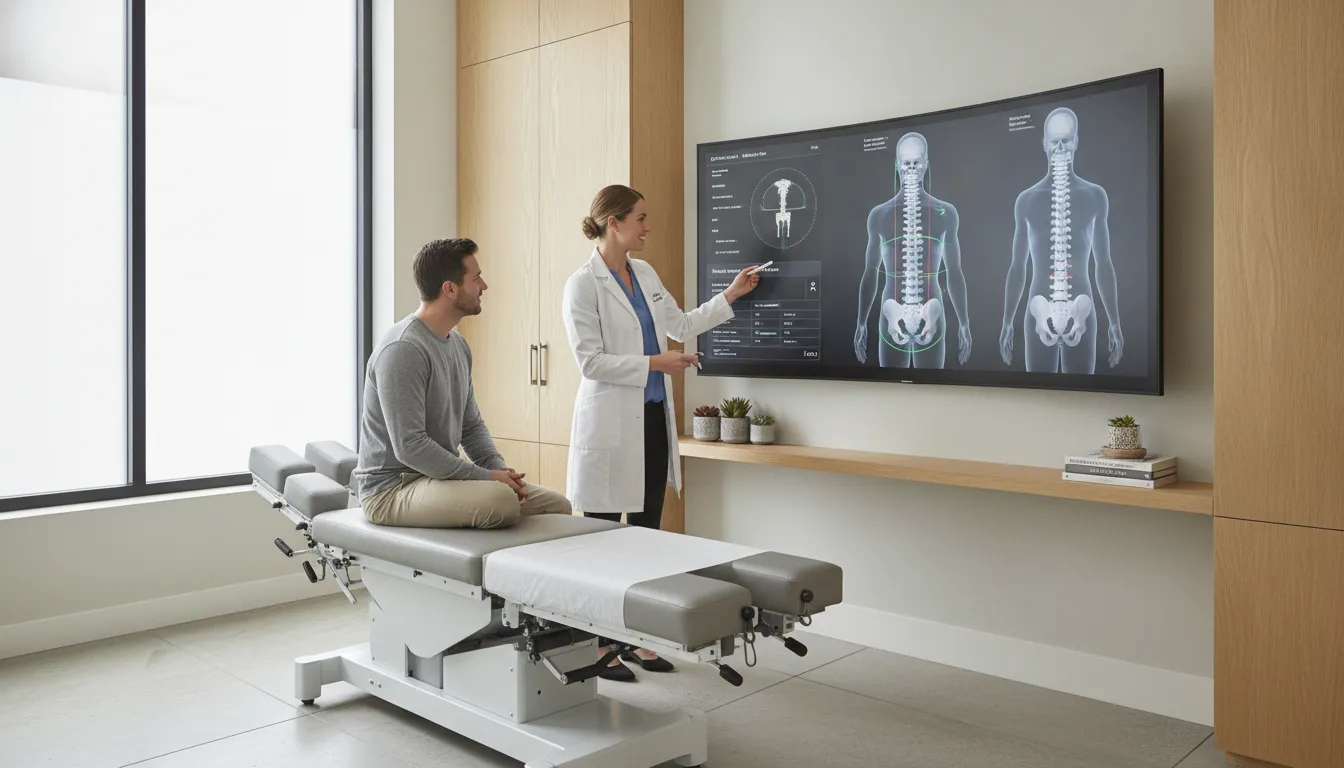
Understanding how these muscles work together is the first step toward building a foundation for long-term spine health. At Ascend, our approach to physical medicine often involves assessing and correcting the imbalances that begin in a weak or unstable core. By focusing on stability, we can help you build a resilient body that moves with confidence and without pain.
Meet Your Core Muscles (It's More Than Abs)
Let's clear up a common misconception: your core is not just your stomach. It’s a complex network of muscles that wraps around your entire torso. Think of it as a muscular corset that includes your abdominal muscles, the muscles in your hips and pelvis, and the deep muscles along your back.
These muscles are designed to work in harmony to support your body, protect your internal organs, and keep your central nervous system safe. When this system is strong and coordinated, it creates a stable base for all your movements, from getting out of a chair to lifting groceries. A truly functional core is about much more than appearance; it’s the bedrock of your body’s structural integrity.
Core Strength vs. Core Stability: What's the Difference?
You might hear the terms “core strength” and “core stability” used interchangeably, but they refer to two different functions. Core strength is your muscles' ability to generate force, like when you do a sit-up. Core stability, on the other hand, is your ability to control movement and resist unwanted motion to keep your spine protected.
Core stability exercises are designed to train the muscles around your spine and torso to work together efficiently. The goal is to improve your control over your spine, preventing it from moving into painful or compromised positions. Think of it this way: strength is the engine, but stability is the advanced suspension system that keeps the car steady on a bumpy road. This control is essential for preventing many of the chronic conditions we treat, especially nagging lower back pain.
How a Stable Core Improves Your Posture
If you find yourself slouching at your desk or while standing, a weak core is often the culprit. Strong, stable core muscles are essential for maintaining good posture. They help you stand and sit up straight, which takes a significant amount of stress off your spine. When your core is engaged, it holds your pelvis and spine in a neutral, aligned position.
This alignment prevents the uneven pressure on your spinal discs and joints that leads to wear and tear over time. It’s a key part of our philosophy of addressing the root cause of pain, not just the symptoms. By building core stability, you’re creating a sustainable solution for better posture, which can reduce back pain and help you move through your day with greater ease.
Debunking Common Core Stability Myths
When it comes to core stability, there's a lot of conflicting advice out there. It's easy to get stuck on old-school ideas that don't give you the full picture of what a strong, stable core can do for your spine health. Let's clear up a few common myths so you can focus on what truly matters for building a resilient foundation.
Myth #1: It's All About the Six-Pack
The first image that comes to mind with "core work" is often a chiseled six-pack. While those visible abs (the rectus abdominis) are part of the equation, they're just the tip of the iceberg. Your true core is a complex system of deep muscles in your abdomen, hips, back, and pelvis. Think of it as a natural corset that works to support your body, protect your internal organs, and keep your spine stable and safe. Focusing only on the six-pack muscles is like polishing the hood of a car while ignoring the engine. True stability comes from strengthening this entire muscular network, not just the parts you can see in the mirror.
Myth #2: Crunches Are the Best Core Exercise
For decades, crunches have been the go-to exercise for a stronger core. But are they the best? Not exactly. Crunches primarily isolate the rectus abdominis and can encourage a forward-flexed posture, sometimes putting extra strain on your neck and lower back. When your deeper core muscles are weak, your lower back often has to overcompensate, leading to more stress and pain. A truly effective core routine moves beyond crunches to incorporate exercises that engage the entire core musculature. This helps build balanced strength that supports your spine from every angle, rather than just focusing on one movement pattern.
Myth #3: Holding a Plank Is All You Need
The plank is a fantastic exercise, but it's not the only tool you need in your toolbox. Holding a static plank builds endurance, which is important, but our daily lives are dynamic. We bend, twist, lift, and walk. A truly stable core is one that can keep your spine protected during these everyday movements, not just when you're holding still. A holistic approach to core training should include both static holds like planks and dynamic exercises that challenge your stability while you move. This combination is what builds a core that's ready for anything life throws your way, from carrying groceries to playing with your kids.
How a Weak Core Puts Your Spine at Risk
Think of your core as the sturdy foundation for your entire body. When that foundation is unstable, it’s only a matter of time before cracks start to show elsewhere, especially in your spine. A weak core doesn't just affect your appearance; it directly compromises the support system for your back, leading to a cascade of issues that can disrupt your daily life. Understanding this connection is the first step toward building a more resilient and pain-free body from the inside out.
The Link to Poor Posture and Misalignment
Your core muscles form a natural corset around your midsection, holding your spine in a healthy, neutral position. When these muscles lack stability, they can't do their job effectively. Your body may start to compensate by slouching, hunching your shoulders, or tilting your pelvis forward. This poor posture isn't just a bad habit; it's a sign of muscular imbalance that can lead to spinal misalignment. Over time, this can cause certain vertebrae to shift, placing uneven pressure on your spine and contributing to chronic discomfort. Our approach to physical medicine often begins by addressing these foundational imbalances to restore proper alignment.
Added Strain on Your Discs and Joints
When your core isn't pulling its weight, other parts of your body are forced to pick up the slack. Your lower back muscles, in particular, often have to work overtime to stabilize your spine. This constant overexertion places a tremendous amount of strain on your spinal discs and joints. This added stress can contribute to chronic pain and even accelerate degenerative conditions. Instead of your core absorbing the shock of daily movements, your delicate spinal structures take the hit, which can lead to persistent aches and long-term problems.
How It Affects Your Daily Movements
A stable core is essential for nearly every move you make, from bending over to tie your shoes to carrying groceries into the house. When your core is weak, your body has to find less efficient ways to generate force, which can make simple tasks feel surprisingly difficult. This instability also significantly increases your risk of injury during everyday activities. You might twist your back while lifting a box or feel a twinge of pain just from sitting at your desk for too long. These are often signs that your core isn't providing the support your spine needs to handle the demands of daily life, which can lead to many of the conditions we treat.
Can a Strong Core Really Prevent Back Pain?
If you’ve ever dealt with a nagging ache in your lower back, you’ve probably heard the advice: “You should strengthen your core.” It’s a common suggestion, and for good reason. Many people experience lower back pain simply because their core muscles aren’t strong enough to do their job. A weak core can lead to poor posture and put extra strain on your spine, but building stability in your midsection can help align your spine properly and ease that discomfort. It’s not about getting a six-pack; it’s about creating a functional, supportive center that protects your back for the long haul.
The Science Behind Core Stability and Spine Health
Think of your core as a natural brace for your spine. It’s a complex system of deep muscles, including your transverse abdominis, obliques, pelvic floor, and diaphragm, that wraps around your torso. When these muscles are strong and work together, they create internal pressure that stabilizes your lumbar spine. This stability is crucial because it helps distribute weight and absorb shock, taking the pressure off your delicate spinal discs and joints. Strong core muscles help keep your spine in a healthy, neutral alignment, which is fundamental to our approach with physical medicine. This support system reduces wear and tear, allowing you to move with more confidence and less pain.
Core Work vs. General Exercise for Back Pain
While any movement is better than none, not all exercise is created equal when it comes to back pain. Research shows that core stability exercises (CSE) are particularly effective for reducing pain and improving function in people with non-specific low back pain. In some studies, these targeted exercises were found to be more beneficial than general physical therapy or other strengthening routines. The difference is that CSE focuses on teaching your deep core muscles to activate correctly and support your spine during everyday movements. This is a key part of addressing the root cause of many conditions we treat, rather than just managing the symptoms.
Creating a Long-Term Solution with Core Training
The goal of core training isn’t to jump into the most difficult exercises you can find. A sustainable, long-term solution starts with the basics. The first step is learning how to properly activate your deep core muscles, often through gentle exercises. From there, you can slowly progress to more challenging movements as your strength and stability improve. Building core strength can be difficult, especially if you’re new to it or dealing with existing health concerns. It’s important to choose exercises that match your current fitness level to avoid injury. For a personalized plan that addresses your specific needs, it’s always best to seek professional guidance to ensure you’re on the right track.
Is Your Core Weaker Than You Think?
Many of us think of a strong core as something reserved for athletes, but it’s the foundation for nearly every move you make. When your core is not functioning optimally, it can send out subtle signals that are easy to ignore or blame on other things, like a bad night's sleep or just "getting older." You might not have obvious stomach weakness, but if you're dealing with persistent aches and a general feeling of instability, your body could be telling you that your core needs more support. Paying attention to these signs is the first step toward addressing the root cause and building a more resilient body from the inside out.
You Experience Nagging Lower Back Pain
That persistent, dull ache in your lower back that you’ve learned to live with might be more than just a side effect of sitting too long. For many people, nagging lower back pain is a direct result of a weak core. Your core muscles act like a natural corset for your spine, providing stability and support. When these muscles are weak, your spine loses its primary support system, forcing the smaller muscles in your lower back to overcompensate. This extra strain can lead to pain and misalignment. Our physical medicine approach focuses on restoring this balance, as strengthening your core can ease discomfort by properly supporting your spine and taking pressure off your overworked back.
Your Balance Feels Off
Do you ever feel a little unsteady on your feet, even when you're just standing still? That feeling isn't always in your head. Your core is your body's anchor, and it plays a huge role in maintaining your balance. When your core is weak, your center of gravity is less stable, forcing your body to work much harder to stay upright. This can make you feel wobbly or clumsy during simple activities. A strong core helps you stay balanced, which is especially important for preventing falls and moving with confidence. If you feel like your coordination isn't what it used to be, a weak core could be the culprit.
Simple Movements Are a Struggle
If everyday tasks like bending over to tie your shoes, lifting a bag of groceries, or twisting to grab something from the back seat of your car cause a twinge of pain, it’s a clear sign your core may be weak. The muscles and ligaments around your spine need to be strong to handle these simple motions. When they lack conditioning, even basic movements can become difficult and painful. This isn't just a normal part of aging; it's an indication that your spine isn't getting the support it needs. Our approach focuses on identifying the root causes of your concerns to help you move through your day with ease and without pain.
How to Test Your Core Stability
Curious about where your core stability stands? You don’t need fancy equipment to get a general idea. These simple tests can give you a baseline understanding of your core function. Think of them as a personal check-in to see how well your deep stabilizing muscles are working together.
Remember, this isn't about achieving a perfect score on day one. It’s about gathering information so you can understand your body better. Pay attention to how you feel during each movement. Do you feel strong and steady, or do you find yourself shaking or losing balance? This feedback is valuable, so let’s get started.
The Plank Endurance Test
The plank is more than just an ab exercise; it’s a fantastic test of your overall core endurance. It calls on a whole team of muscles, from your deep abdominals to your back and hips, to work together to hold your body stable. The ability to hold a solid plank is a good indicator of your core’s ability to support your spine during daily activities.
To try it, get into a push-up position, but rest your weight on your forearms instead of your hands. Your body should form a straight line from your head to your heels. Keep your hips from sagging or rising too high, and time how long you can hold this position with good form. Research on core training shows that this kind of endurance is crucial for performance and injury prevention.
The Bird-Dog Balance Check
The bird-dog exercise is a great way to check your dynamic stability, which is your core’s ability to keep you steady while you’re in motion. This movement challenges your coordination and balance, revealing how well your core can manage shifts in your center of gravity. It specifically engages the small muscles in your lower back and abdomen that are essential for maintaining proper spinal alignment.
Start on all fours with your hands under your shoulders and your knees under your hips. Slowly extend your right arm forward and your left leg backward, keeping your back flat and your hips level. The goal is to move without any wobbling or arching in your lower back. If you can perform this movement smoothly, it’s a good sign your core is doing its job.
The Single-Leg Balance Test
How well can you stand on one foot? This simple action speaks volumes about your core stability. When you lift one foot off the ground, your core muscles have to fire immediately to keep your pelvis and spine from tilting or rotating. It’s a true test of functional stability that mimics the demands of walking, running, and climbing stairs.
To test yourself, stand with your feet together and then lift one foot a few inches off the floor. Try to hold this position for 30 seconds without holding onto anything for support. Notice if you have to windmill your arms or if your standing ankle wobbles a lot. Studies show a clear relationship between core stability and single-leg balance, so improving one often helps the other.
How to Track Your Improvement
The best way to see progress is to track it. You don’t need a complicated system; a simple notebook or a note on your phone will do. After performing these tests, jot down your plank time and how long you were able to hold your balance on each leg. Re-test yourself every few weeks to see how your numbers change.
This consistent self-assessment is a powerful tool for taking charge of your health. Monitoring your progress helps you stay motivated and provides concrete evidence that your efforts are paying off. If you find that you aren't making progress or that these movements cause pain, it might be a sign that a deeper issue needs to be addressed. That’s a good time to consider seeking professional guidance from our physical medicine team.
5 Foundational Exercises for a Stable Core
Building a stable core doesn't require complicated routines or heavy equipment. It really just starts with mastering a few key movements that teach your muscles to work together to support your spine. Think of these five exercises as the building blocks for a strong, resilient core that will serve you for years to come. As you work through them, your main focus should always be on control and proper form over speed or the number of repetitions. A slow, intentional movement is always more effective than a fast, sloppy one. This approach aligns with our philosophy at Ascend Functional Health, where we focus on addressing the root causes of health concerns rather than just chasing symptoms.
A stable core is a critical piece of that puzzle, providing the support your spine needs to function correctly and without pain. It's the central link in a chain connecting your upper and lower body, and when it's weak, that chain breaks down. This can lead to a host of issues, from nagging back pain to poor posture and an increased risk of injury. By consistently practicing these foundational exercises, you are actively training your body to maintain proper alignment and distribute forces evenly. If you feel any sharp pain while performing these movements, it's important to stop. This could be a sign of an underlying issue that needs professional attention. Our team can help create a personalized plan that addresses your specific needs and ensures you’re moving safely and effectively toward your health goals.
1. The Plank
The plank is a classic for a reason. It’s an isometric exercise, meaning you hold a single position, which challenges your endurance and teaches your core to stay engaged. This movement works the deep stabilizing muscles of your abdomen and back, along with your shoulders and glutes. Think of it as a full-body exercise that trains your torso to remain stiff and supported. Research shows that plank exercises significantly enhance core stability and are effective in improving your postural control. By practicing planks, you’re building the foundation for better posture and reducing the strain on your spine during everyday activities like sitting at a desk or lifting groceries.
2. The Bird-Dog
The bird-dog is a fantastic exercise for improving balance and coordination while strengthening the muscles that support your spine. It specifically targets the deep muscles that wrap around your midsection and attach to the vertebrae. As you extend your opposite arm and leg, your core has to work hard to prevent your torso from twisting or your lower back from arching. Studies have found that the bird-dog exercise promotes lumbar stability and is particularly beneficial for individuals who experience low back pain. The key is to move slowly and with intention, keeping your hips and shoulders square to the floor throughout the entire movement.
3. The Dead Bug
Don’t let the silly name fool you; the dead bug is a powerhouse for core stabilization. This exercise is performed while lying on your back, which makes it incredibly effective at training your core without putting unnecessary pressure on your spine. As you lower your opposite arm and leg, your abdominal muscles must work to keep your lower back connected to the floor. This movement is excellent for building deep core strength and coordination. Evidence shows that the dead bug effectively engages the core muscles while promoting spinal stability, making it a safe and valuable option for almost everyone, including those with sensitive backs.
4. The Side Plank
Your core doesn't just work from front to back; it also needs to be strong from side to side. The side plank targets the obliques and other muscles along the sides of your torso that are crucial for preventing lateral shifting of the spine. This is essential for stability during activities like walking, running, or carrying objects on one side. Research confirms that side planks significantly activate the oblique muscles, which play a vital role in stabilizing the spine during dynamic movements. Holding a strong side plank helps build a well-rounded, 360-degree support system for your back, improving your resilience against twisting or side-bending injuries.
5. The Glute Bridge
You might think of the glute bridge as a lower-body exercise, but it’s also fundamental for core stability. Your glutes are powerful muscles that help control the position of your pelvis. When your glutes are strong and active, they prevent your pelvis from tilting too far forward, which can place stress on your lower back. The glute bridge strengthens this connection between your lower body and your core. Studies indicate that this exercise contributes to improved pelvic stability and spinal alignment by activating the glutes and core muscles together, making it another great tool for addressing lower back discomfort.
Create a Core Routine You'll Actually Stick With
The most effective core routine isn’t the most intense one; it’s the one you do consistently. Building a stable core is a marathon, not a sprint. The goal is to create a simple, sustainable practice that integrates into your life. Forget the "all or nothing" mindset. A few focused minutes several times a week will deliver far more benefits for your spine health than one grueling session every few months. The key is to start where you are and build from there, focusing on quality movement and listening to your body’s feedback along the way.
How Often to Train and How to Progress
Consistency is your best friend when it comes to core stability. Aim to practice your core exercises three to four times per week. This regularity helps you build muscle memory and endurance for long-term benefits. These exercises can easily be done from the comfort of your home, making it easier to stick with the routine. As you get stronger, you can progress. This doesn't always mean adding more repetitions. You can increase the challenge by holding a static position for a few seconds longer, slowing down a dynamic movement to improve control, or moving to a slightly more advanced variation of an exercise. The most important thing is to listen to your body and progress at a pace that feels right for you. If you need guidance creating a personalized plan, our physical medicine approach can help.
Balance Static Holds with Dynamic Movements
A well-rounded core routine includes a mix of both static and dynamic exercises. Static holds, like a plank, challenge your core to hold the spine in a stable, neutral position, building endurance. Dynamic movements, like the bird-dog, train your core to maintain that stability while your arms and legs are in motion. This combination is what builds a truly functional core that supports you through all your daily activities. A stable spine is also a more flexible one, which helps you move better and reduces the chance of pain. By incorporating both types of exercises, you’re preparing your body for the variety of demands it faces every day, from carrying groceries to simply sitting with better posture.
Proper Form: What to Watch For
When it comes to core exercises, quality will always trump quantity. Performing an exercise with proper form ensures you’re engaging the correct muscles and protecting your spine. Your core acts as a natural brace, and strengthening it correctly reinforces good alignment. Poor form, on the other hand, can put unnecessary strain on your back and joints. Pay close attention to your body. During a plank, for example, focus on keeping a straight line from your head to your heels, avoiding sagging hips. If you feel a sharp pain, stop. It’s better to do fewer repetitions with perfect form than many with poor technique. If you're unsure about your form, getting a professional assessment can provide the clarity you need to move forward safely and effectively.
When to Seek Professional Support
You’ve been doing the planks, you're mastering the bird-dog, and you're paying more attention to your core. That's a huge step in the right direction for your spine health. But what happens when the nagging pain doesn't go away? Or when you feel like you've hit a plateau and something still feels "off"? While building core stability on your own is incredibly beneficial, it's not always the complete answer. Sometimes, there are underlying issues that simple exercises can't fully address, and it can be frustrating trying to figure it out alone.
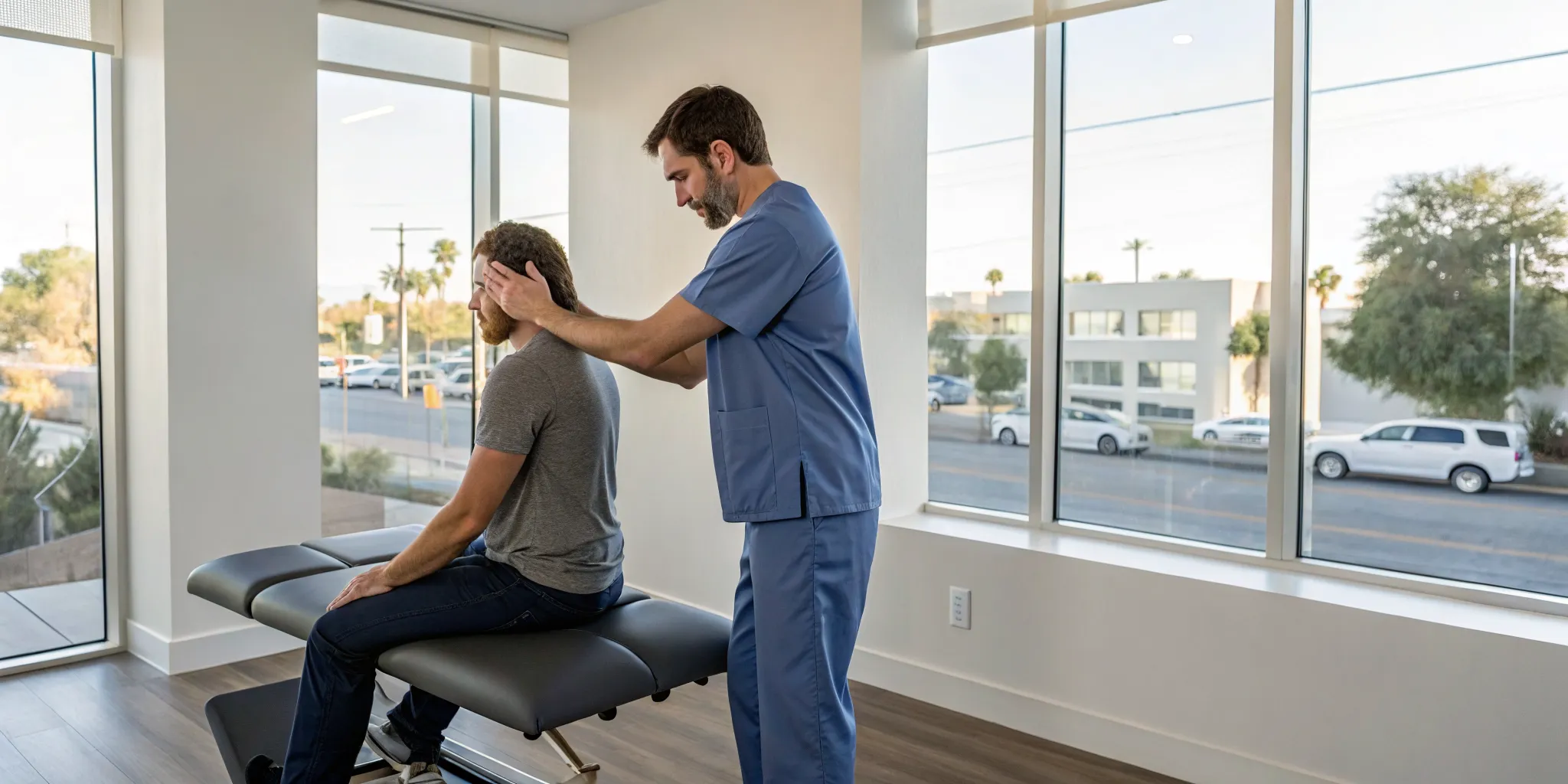
This is where professional guidance becomes so valuable. Think of it as bringing in an expert to look under the hood when you know something isn't right with your car but can't pinpoint the problem. A trained professional can provide a thorough assessment to get to the bottom of what's really going on with your body. They can help identify the root cause of your discomfort, which might be something other than simple core weakness. If you feel stuck or your symptoms are persistent, it might be time to reach out for support.
Warning Signs That It's More Than a Weak Core
It’s important to listen to your body’s signals, especially when they whisper (or shout) that something more is going on. If you experience persistent pain, numbness, or weakness that doesn’t improve with core exercises, it may indicate a more complex issue that needs a closer look. Because a weak core often makes the lower back work harder, it can lead to more significant stress and pain over time if the true cause isn't addressed.
Many cases of back pain don't have an obvious origin, which makes finding an effective solution tricky. That's why it's crucial to recognize when your symptoms go beyond typical muscle fatigue. These are the kinds of underlying conditions that a professional can help investigate and manage.
How We Address Core and Spine Health at Ascend
Our approach begins with understanding your unique body and health history. We know that a strong core acts like a natural brace for your spine, so we often use core stability exercises as a foundational part of our care. We focus on a structured progression that starts with learning to activate the right muscles correctly. From there, we guide you toward more challenging exercises that integrate with your daily movements, ensuring the strength you build is functional.
This isn't about just handing you a list of exercises. It's about creating a personalized plan that addresses the root of your instability. By combining targeted physical medicine with a holistic view of your health, we help you build a truly stable foundation for long-term well-being.
Related Articles
- The Importance of Spinal Health for Overall Wellness | Alessi Functional Health
- Spinal Health Chiropractic: A Complete Guide
- Expert Spinal Curve Correction in Tampa Bay - Alessi Functional Health
- Scoliosis Care 101: A Complete Patient Guide
- Spinal Stenosis of Lumbar Region: Symptoms & Treatment
Frequently Asked Questions
I'm busy. How much time do I really need to spend on core exercises to see a difference? You don't need to spend an hour every day to build a more stable core. The key is consistency, not duration. Aim for three to four focused sessions per week, even if they are only 10 to 15 minutes long. A short, consistent practice where you focus on excellent form will do more for your spine health than one long, intense session every few weeks. It's about creating a sustainable habit that fits into your life.
I tried some of these exercises, but my back hurts when I do them. What should I do? This is an important signal from your body, so the first step is to stop the exercise that is causing pain. While these movements are generally safe, pain can indicate that your form needs adjustment or that there's an underlying issue preventing your core from engaging correctly. It's better to pause and get professional guidance than to push through pain and risk further strain.
I already lift weights and feel strong. Isn't that enough for my core? It's fantastic that you're building overall strength, but core stability is a bit different. General strength training often focuses on larger muscle groups that produce powerful movements. Core stability, however, is about training the deep, smaller muscles to hold your spine steady and resist unwanted motion. Think of it as the difference between having a powerful engine and having a great suspension system; you need both for a smooth, safe ride.
If I only have time for one exercise, which one gives the most benefit for my spine? While it's tempting to look for a single magic bullet exercise, a truly resilient core is built with variety. Your core muscles wrap around your entire torso, and different exercises challenge them in different ways. For example, a plank builds front-to-back endurance, while a side plank addresses stability from side to side. If you are extremely short on time, combining a few reps of two complementary exercises, like the bird-dog and a glute bridge, will give you more balanced benefits than just doing one.
How long does it typically take to build core stability and feel a change in my back pain? Building true stability is a gradual process, and everyone's body responds differently. Some people notice improvements in their posture and a reduction in minor aches within a few weeks of consistent practice. For others, especially if the weakness is more significant, it might take a couple of months to build the foundational strength needed to feel a real difference. The goal is to focus on steady progress and quality movement, not a specific timeline.