Choosing a Wesley Chapel chiropractor is about more than finding an office nearby. The right conversation should help you understand how your movement, health history, goals, and response to care will shape the plan. A thoughtful evaluation can also clarify whether corrective care, decompression, soft-tissue work, or another approach makes sense for your situation.
Explore Ascend Physical Medicine and movement-focused care
What Should a Wesley Chapel Chiropractor Evaluate First?
A useful first evaluation connects your symptoms with how you move, rather than treating one uncomfortable area in isolation. It should give you a clear explanation of the findings and a reasonable way to track progress.
Depending on your concerns, a clinician may discuss your health history, the activities that aggravate or ease symptoms. Posture, range of motion, strength, balance, and other orthopedic or neurological findings. Imaging may be considered when it adds useful information to the clinical picture. The purpose is not to order every possible test. It is to gather enough relevant information to make a responsible care decision.
Bring details that can improve the discussion:
- When the concern began and whether it followed a specific event
- Which movements, positions, work demands, or activities affect it
- What you have already tried and how your body responded
- Any known diagnoses, prior imaging, procedures, or current care
- Your practical goals, such as walking comfortably, returning to exercise, or working with less strain
A clinician should also explain when chiropractic care is not the right next step. A plan built around honest boundaries is more useful than a promise that one technique will fit every person.
How Can You Compare Corrective Care Plans?
Corrective care should be based on documented findings, a defined goal, and regular reassessment. It is not simply a longer list of visits or a preset sequence that ignores how you are responding.
Ask how the proposed plan is connected to your evaluation. For example, does it address a mobility limitation, a strength or coordination issue, a postural pattern, or a combination of factors? Ask what will be done in the clinic and what movement or recovery habits will support the work between visits.
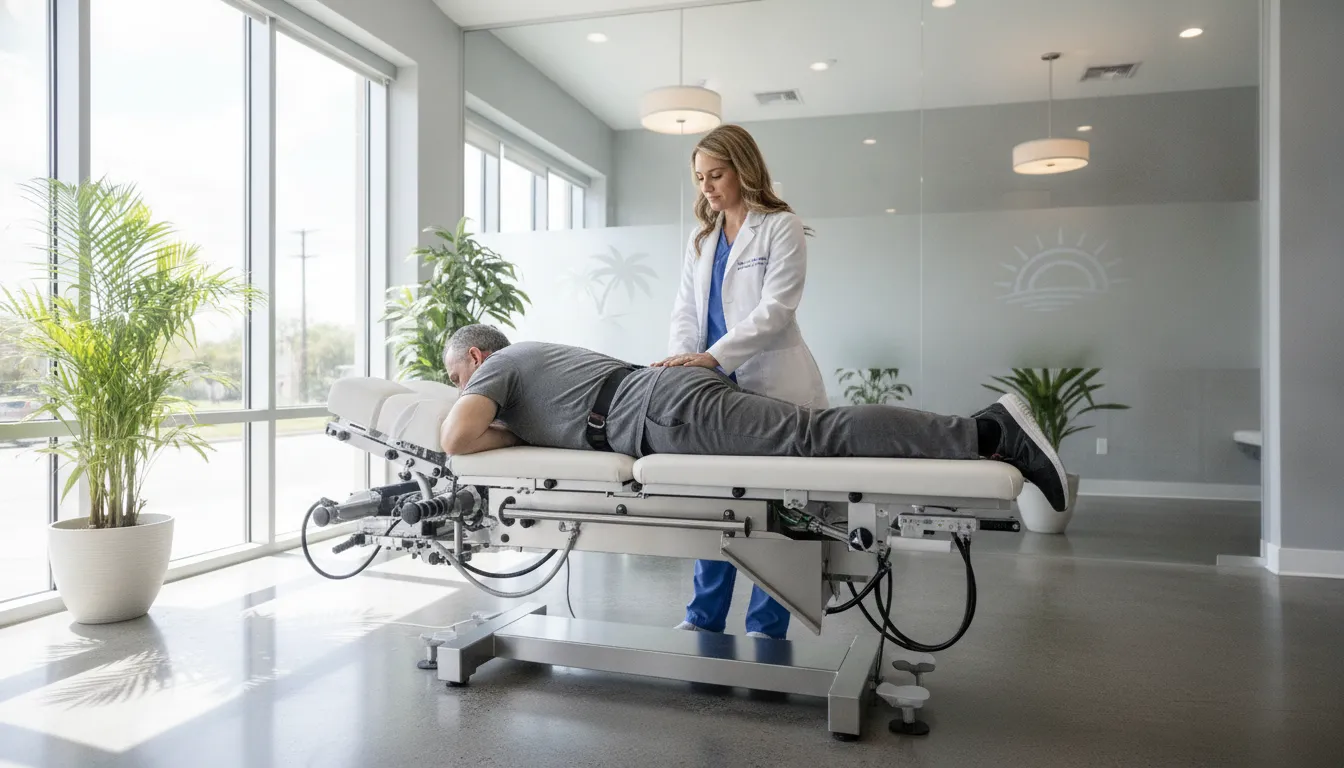
A movement-focused plan may combine hands-on chiropractic care with corrective exercises, mobility work, spinal decompression, soft-tissue techniques, or other supportive services. The combination should have a reason. More treatment is not automatically better treatment, and a plan should change when the findings or your response change.
Progress can be discussed in practical terms, such as:
- Improved range of motion or tolerance for a specific activity
- More consistent walking, lifting, sitting, sleeping, or exercise capacity
- Changes in strength, balance, coordination, or movement quality
- Less frequent or less disruptive symptoms, when that is an appropriate goal
- Greater confidence in managing normal daily movement
Ask what would cause the clinician to reassess the plan, refer you to another professional, or pause a technique. Those answers help you judge whether the practice values individualized care over a one-size-fits-all routine.
When Might Decompression Be Discussed?
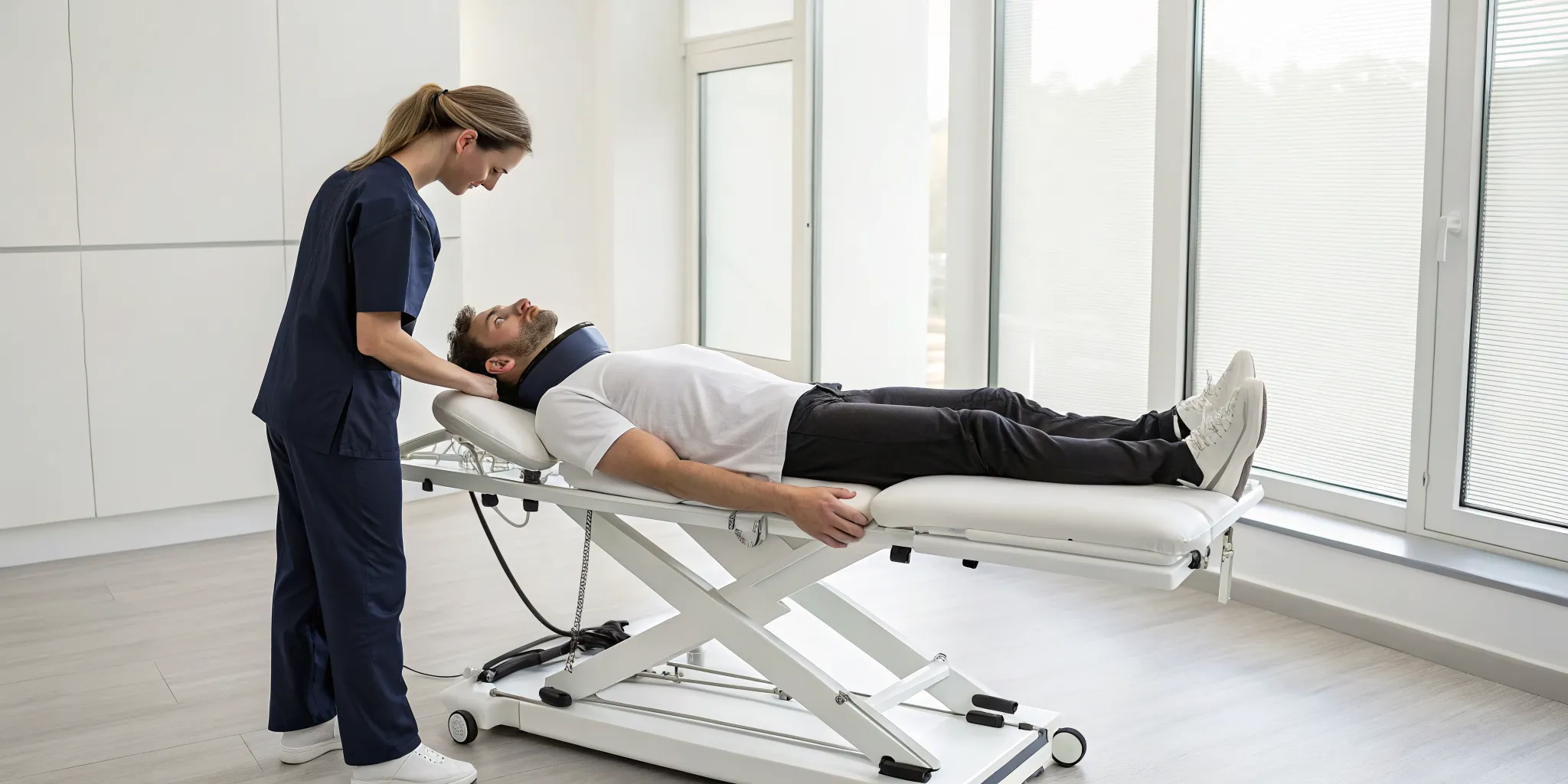
Spinal decompression may be discussed when a clinical evaluation suggests that a lower-load approach to the spine could support your goals. It is not automatically appropriate for every type of back or neck concern, and a consultation should determine fit.
Ask what the clinician is trying to address, how the approach fits your examination, and how it will be combined with movement retraining or other care. You can also ask what sensations are expected during a session, how your response will be monitored, and what changes would lead to a different approach.
Decompression is often one part of a broader physical medicine plan. A person may also need guidance on movement habits, strength, mobility, or load management. The goal is to make the overall plan understandable and measurable, not to present a machine or technique as a stand-alone answer.
If you have prior imaging or a history of spinal procedures, share that information before beginning care. Ask the clinician to explain any precautions in plain language. You should leave the discussion knowing why decompression was suggested, what the next checkpoint will be, and how you can report a change in symptoms.
How Can Soft-Tissue Care Fit Into a Movement Plan?
Soft-tissue care may help address restrictions or sensitivity in muscles and connective tissues that influence how you move. Its role should be connected to your examination and to a functional goal, not treated as an isolated relaxation service.
A clinician may discuss myofascial release, focused soft-tissue work. Or another hands-on method when an area appears to limit motion or change how you load a joint or the spine. The technique, pressure, and timing should be adapted to your tolerance, history, and response.
Useful questions include:
- Which movement or finding makes this technique relevant for me?
- How will we know whether it is helping my mobility or function?
- Should I move, stretch, rest, or modify activity after the session?
- What response should I report before the next visit?
- How does soft-tissue care connect with chiropractic adjustments or corrective exercise?
Some people notice temporary tenderness after hands-on work. Tell the clinician about any response that concerns you or interferes with normal activity. Clear communication allows the plan to be adjusted rather than assuming that a stronger technique is always the right choice.
Which Questions Should You Bring to a First Visit?
The best first-visit questions help you understand the evaluation, the proposed care, and how decisions will be made over time. You do not need to know the name of a technique before asking for an explanation.
Questions about the evaluation
- What findings are most relevant to my movement goals?
- Will you assess the areas above and below the place where I feel symptoms?
- When would imaging or another type of evaluation add useful information?
Questions about the plan
- Which approaches are you recommending first, and why?
- What part of the plan is performed in the clinic, and what can I practice between visits?
- How will the plan be adapted if my response is different than expected?
Questions about progress
- Which changes should we track?
- When will we reassess whether the plan is supporting my goals?
- What signs would indicate that I should seek another type of evaluation?
These questions are useful whether you are comparing a local practice in Wesley Chapel, a Tampa provider, or another option in the greater Tampa Bay area. The quality of the conversation matters as much as the name of a technique.
How Do You Know Whether a Plan Is Being Personalized?
A personalized plan reflects your examination, goals, history, and response to care. It should be specific enough to understand, but flexible enough to change when new information becomes available.
Look for a clinician who can explain the link between a finding and a recommendation without relying on dramatic claims. You should be invited to share your priorities and concerns. You should also receive a way to discuss progress, questions, and any unwanted response between visits.
Personalization can show up in small but important choices:
- The clinician asks about the activities you want to return to, not only where you feel discomfort.
- The examination is relevant to your concern rather than identical for every person.
- The plan has a sequence and a reason for combining or changing approaches.
- Progress is discussed using function and meaningful daily activities.
- The clinician explains limits, precautions, and referral options when appropriate.
Ascend Functional Health describes its Physical Medicine approach around evaluation, corrective care, decompression, lumbar care, chiropractic care, and soft-tissue work. The right next step is still determined by an individual consultation, not by a blog post or a keyword.
What Can You Do Before Your Consultation?
Preparation makes it easier to use your appointment time well. Write down your main concern, the activities you want to improve, and the questions you want answered.
Use this short checklist:
- Describe the goal. Choose one or two activities that matter most to you, such as turning your head while driving, sitting through a workday, or returning to a favorite activity.
- Record the pattern. Note when symptoms appear, what changes them, and whether the pattern has shifted.
- Gather relevant information. Bring prior reports or a list of past care when available and appropriate.
- List your questions. Include questions about the evaluation, recommended techniques, expected checkpoints, and alternatives.
- Discuss safety openly. Share relevant health history, current care, recent changes, and anything that makes a technique uncomfortable or concerning.
- Clarify next steps. Before leaving, make sure you understand what happens next and when progress will be reviewed.
Readers in Wesley Chapel can also review Ascend's Wesley Chapel service-area information and the broader Physical Medicine overview before deciding whether a consultation fits their needs.
Contact Ascend to discuss your movement goals and next steps
What Questions Do Patients Commonly Ask a Chiropractor?
A first conversation should give you enough information to make a considered care decision. These common questions can help you prepare without assuming that one approach fits everyone.
Should a chiropractor assess more than the painful area?
Often, the way you move through nearby joints, muscles, and the spine can affect the area where you notice symptoms. Ask how the clinician's examination will connect local findings with your broader movement pattern.
Can corrective care include more than adjustments?
Yes. Depending on the evaluation, a plan may include movement guidance, corrective exercise, decompression, or soft-tissue work alongside chiropractic care. The clinician should explain the purpose of each component and how the pieces fit together.
How can I tell whether decompression is appropriate for me?
Ask what finding or goal led to the recommendation, what response will be monitored, and what alternatives are available. A clinician should review relevant history and explain precautions before beginning.
How often should a care plan be reviewed?
Review timing depends on the concern, the plan, and your response. Ask which changes will be tracked and what checkpoint will be used to decide whether to continue, adapt, or refer.
Should I seek another evaluation if symptoms change?
Tell your clinician about any new, worsening, or concerning change. Prompt medical evaluation may be appropriate when symptoms do not fit the original concern, interfere significantly with normal function, or raise a safety concern.
Request a conversation with Ascend Functional Health about personalized Physical Medicine care
This content is educational and is not medical advice. Consult your clinician before acting on health information or changing your care.