When a recent episode of back discomfort makes bending, sitting, or walking harder, it is natural to ask whether manual therapy for acute low back pain might fit. The answer depends on the symptom history, movement findings, health context, and the activities that matter to you; hands-on care is one possible part of an individualized plan, not a guaranteed result.
Discuss your care options with Ascend
How Is Manual Therapy for Acute Low Back Pain Considered?
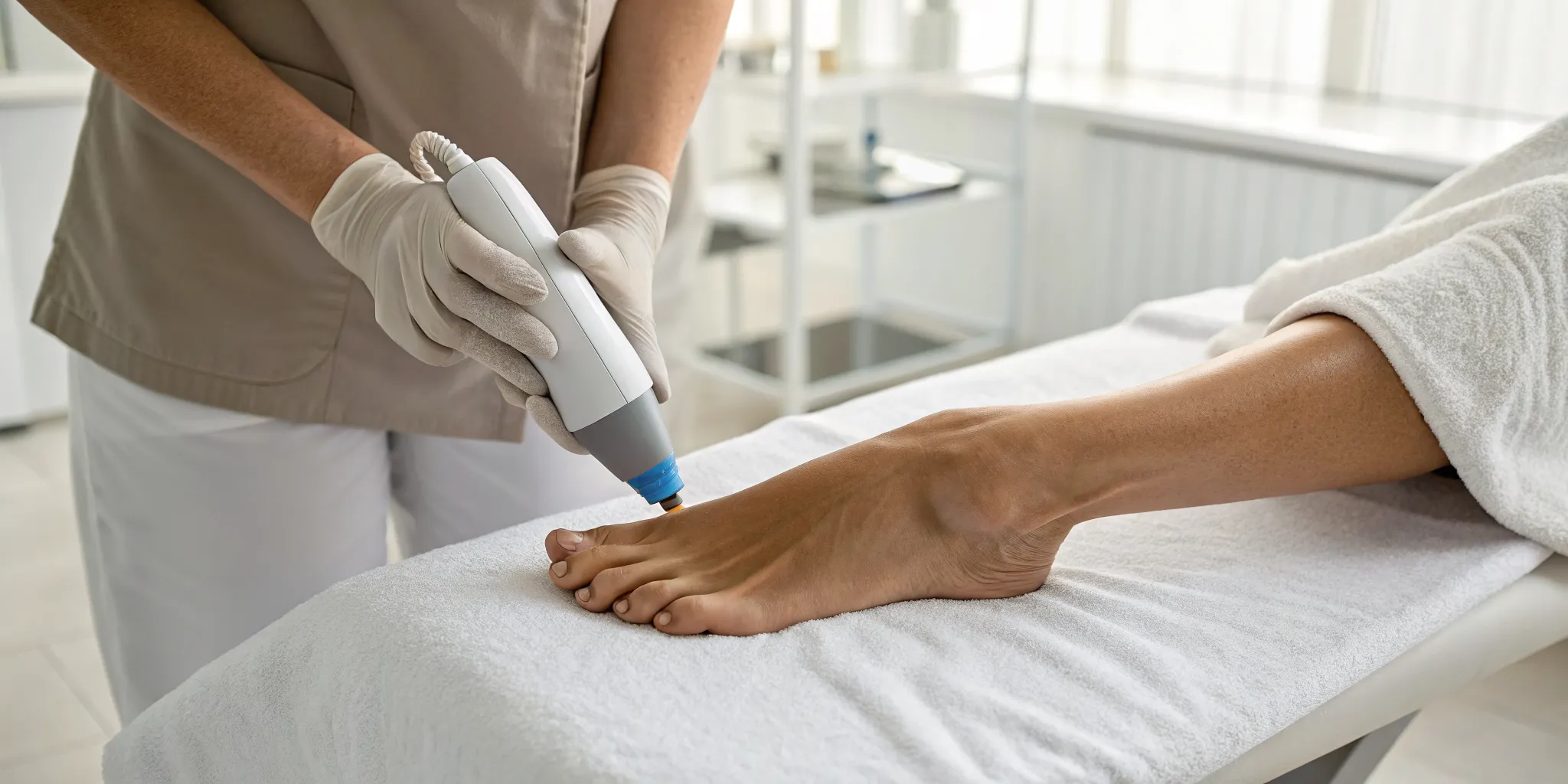
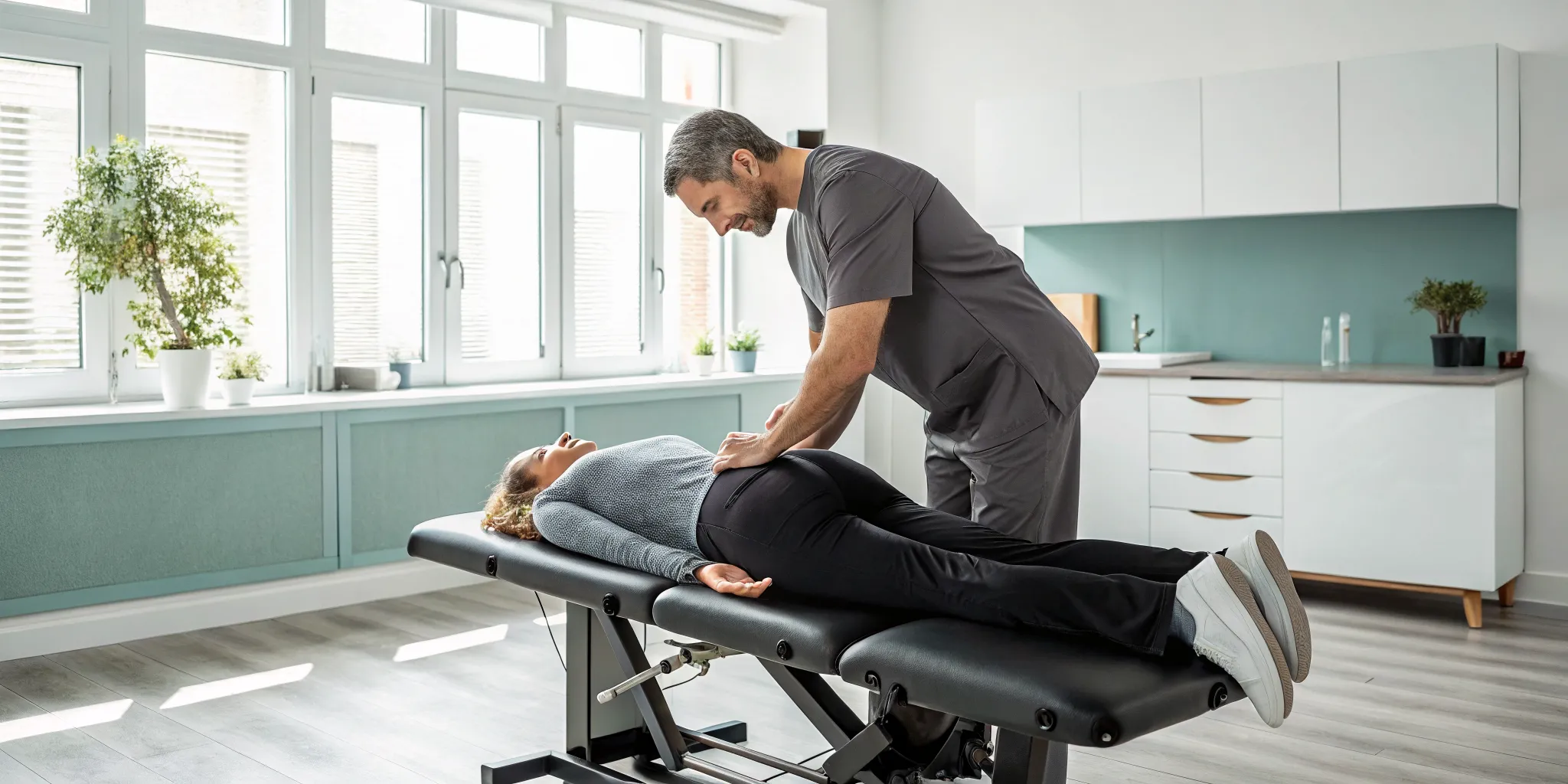
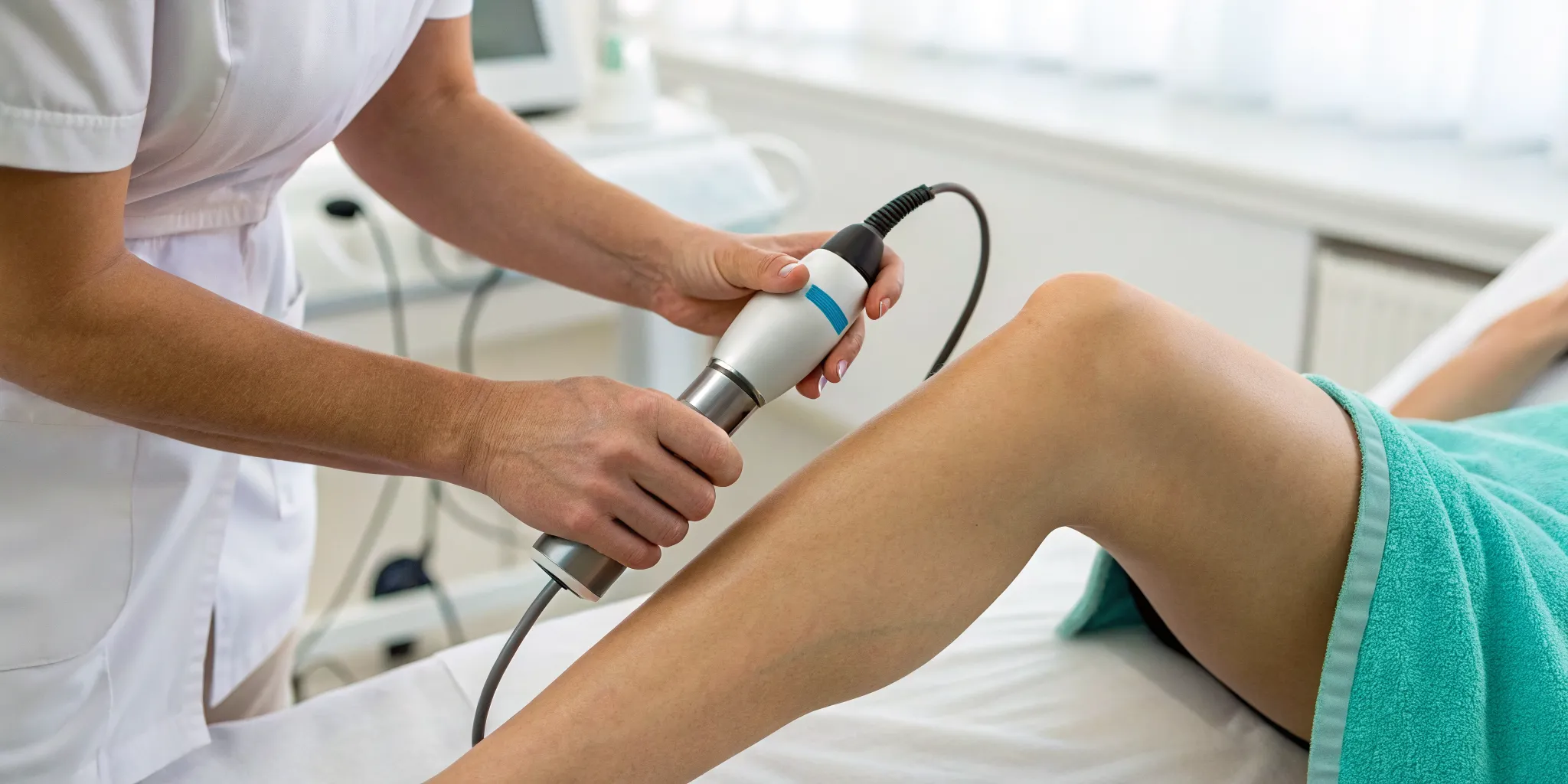
Manual therapy may be considered as one component of care after a clinician reviews your symptoms and movement. It is not a single standardized procedure, and an evaluation helps determine whether hands-on approaches belong alongside other steps.
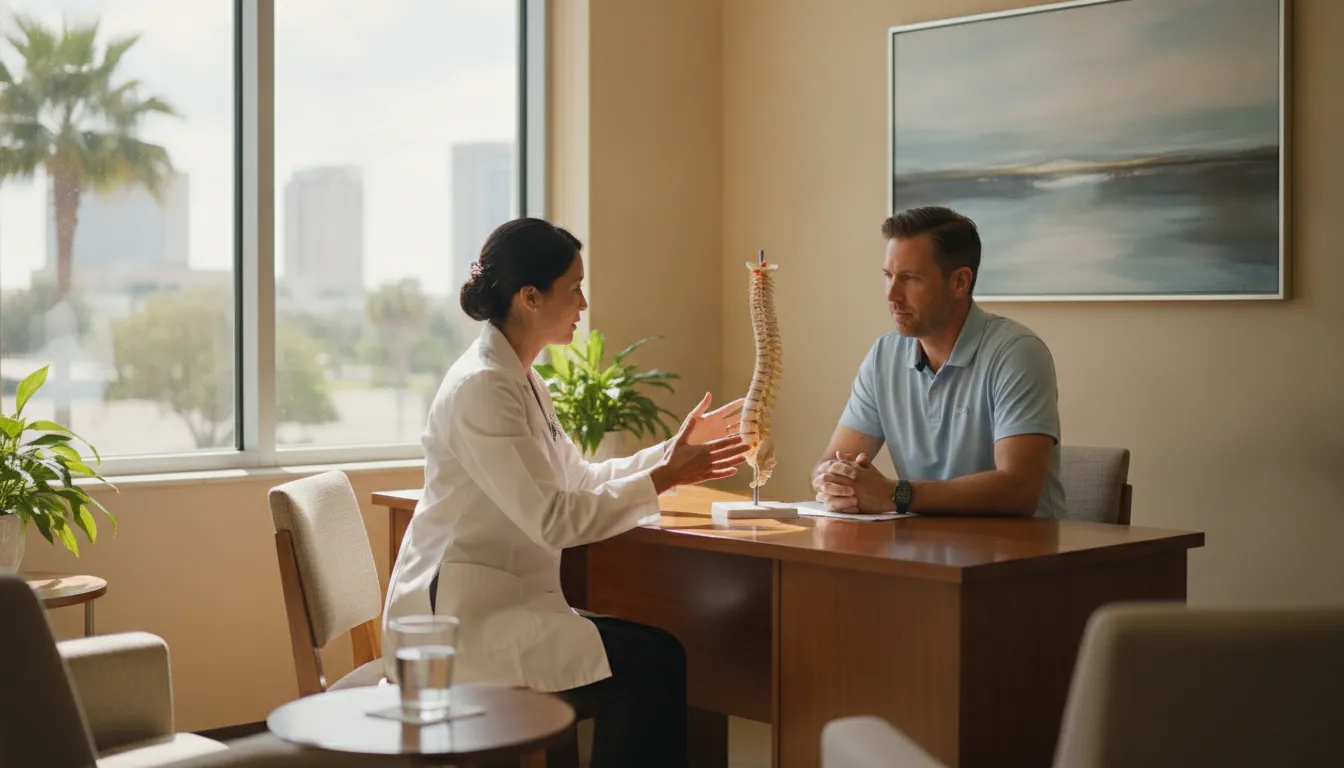
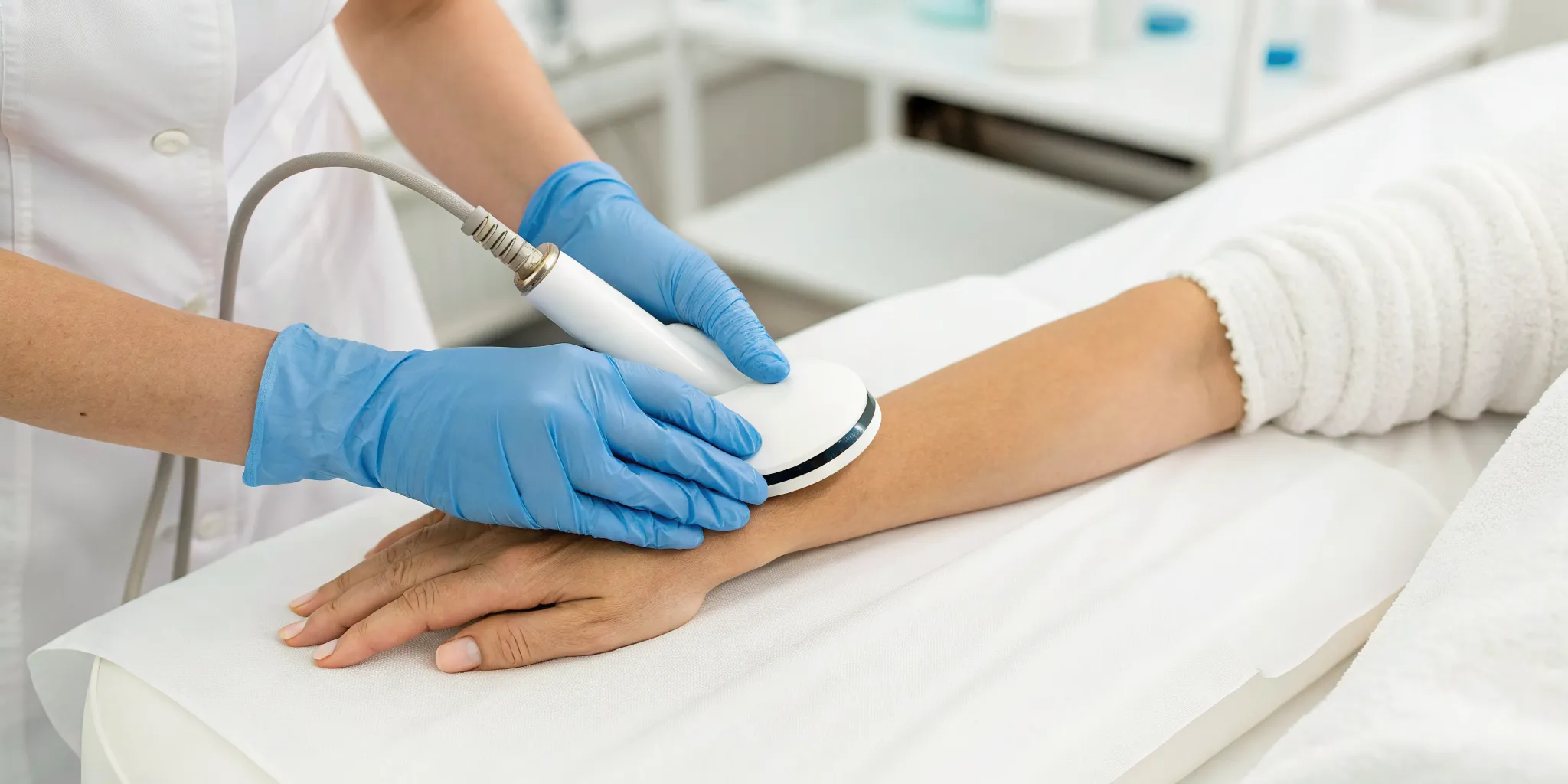
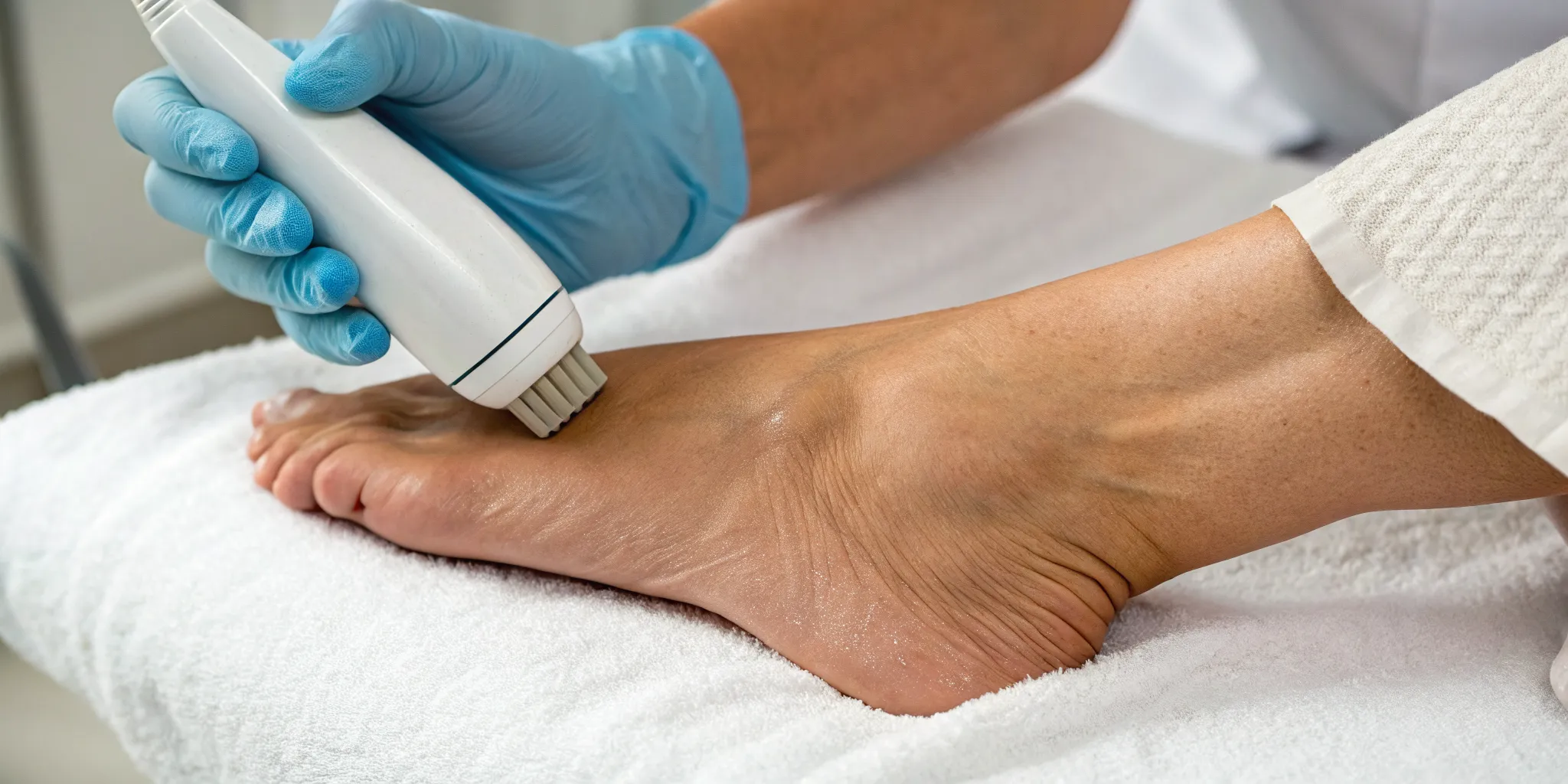
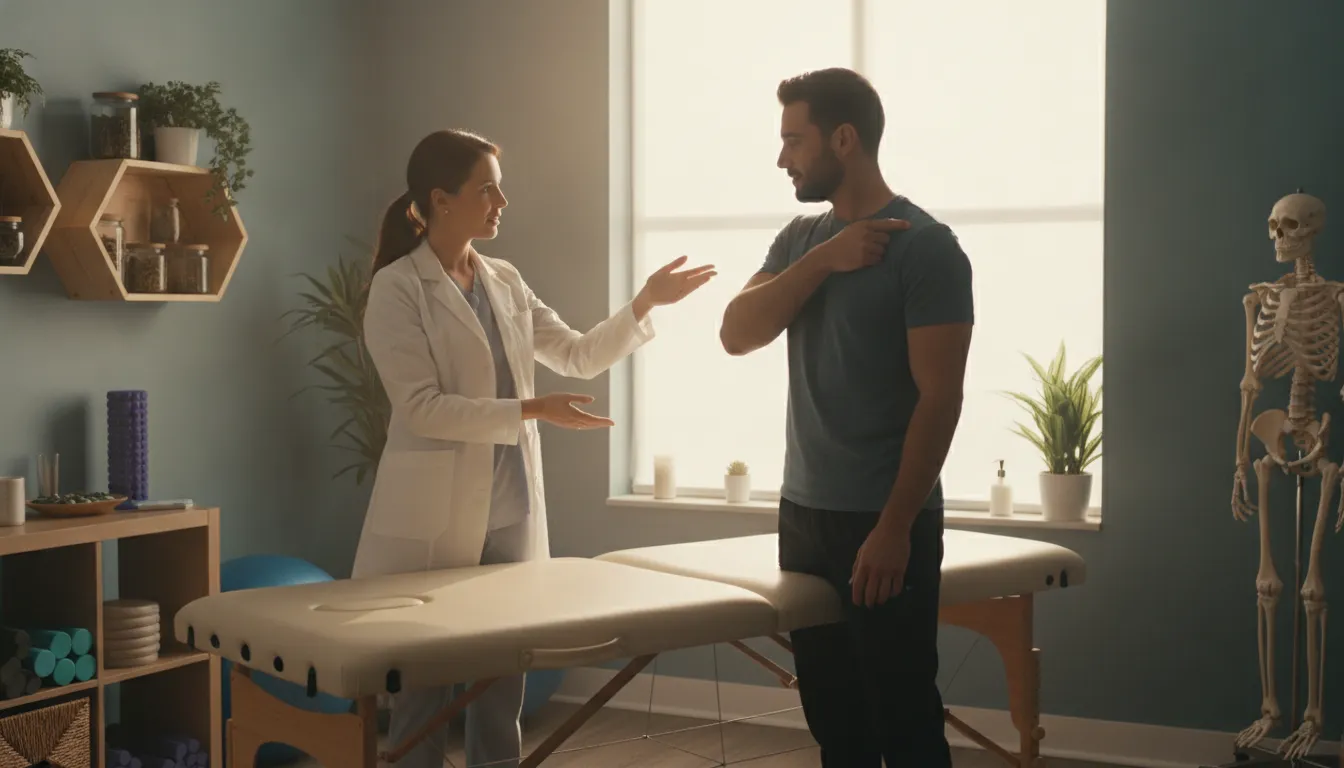
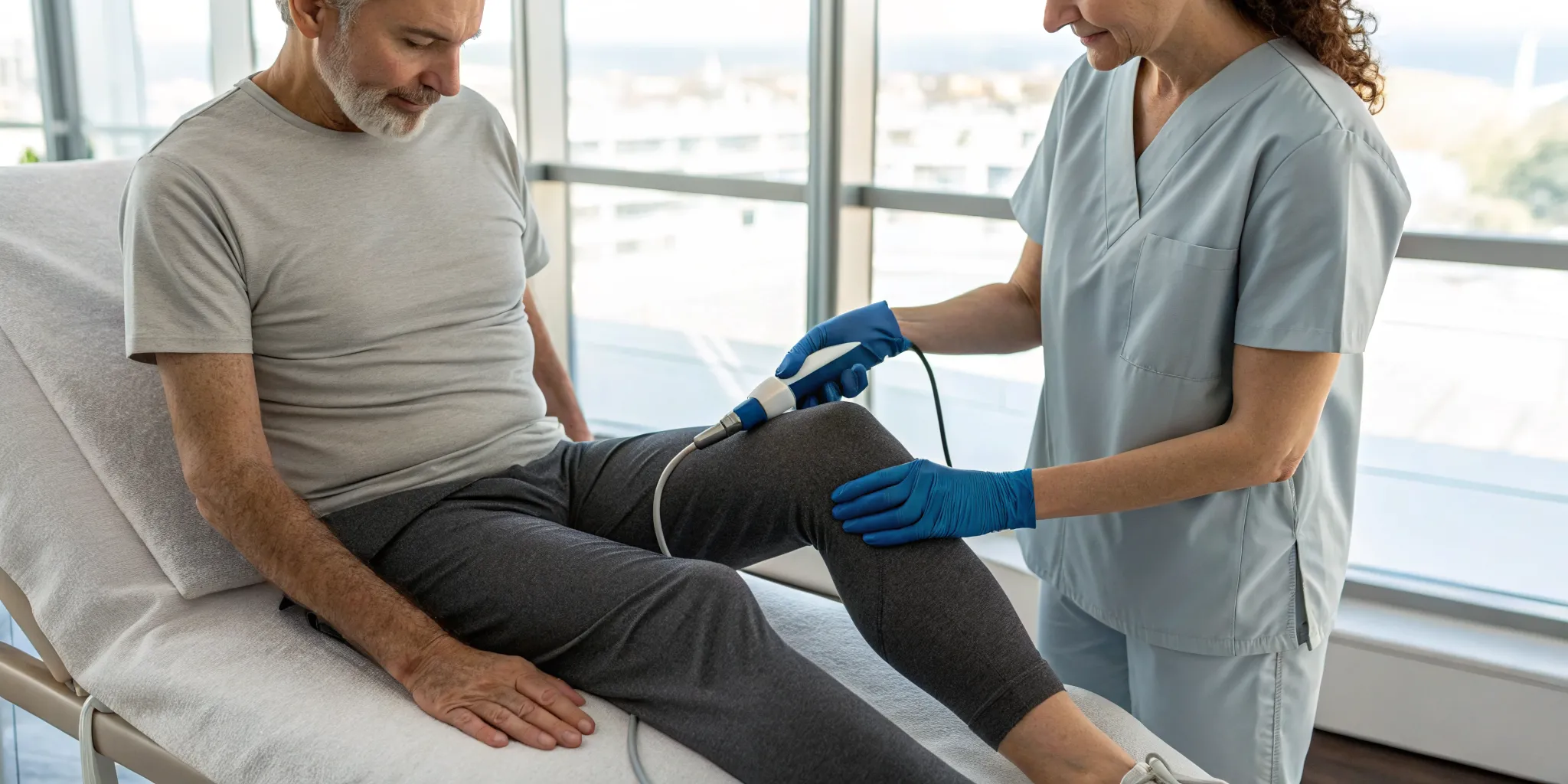
The phrase can refer to clinician-applied techniques involving joints or soft tissue. The purpose of an assessment is not to select a technique from a list before understanding the person. A clinician first asks how the discomfort began, how it has changed, which movements are limited, and whether there are relevant health factors or prior episodes.
That context matters because similar descriptions of back discomfort can have different patterns and needs. Some people mainly notice stiffness after sitting; others report difficulty with a particular transition or everyday task. The clinician can compare your account with posture, range of motion, and movement tolerance, then explain which options appear appropriate to discuss.
Evidence reviews describe manual approaches as a broad group rather than one uniform treatment. A critical review of manual therapy evidence considers evidence across conditions, while a separate review of physical therapy approaches for low back concerns describes clinical assessment and care approaches. Research findings can help frame a conversation, but they do not predict an individual person's response.
The word acute generally describes a recent episode or a shorter symptom timeline; it does not, by itself, identify a cause or determine which care option fits. Your clinician may ask about the day symptoms began, whether there was a specific change in activity, and how the pattern has shifted since. Those details help distinguish the timeline from the decisions that still require an individual assessment.
What Can an Evaluation Add to Manual Therapy for Acute Low Back Pain?
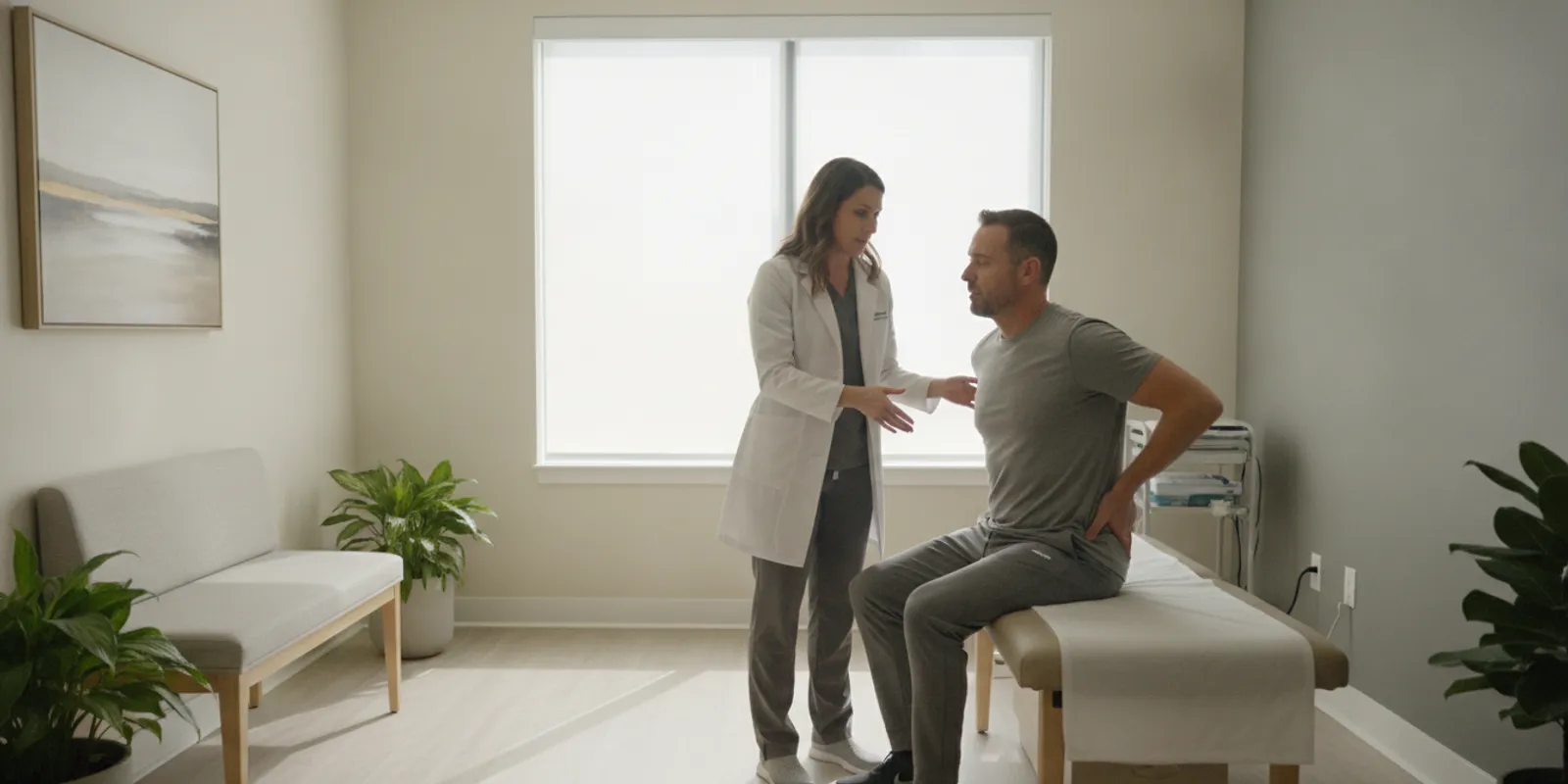
An initial evaluation connects your symptom story to a focused physical assessment and a discussion of goals. It can help clarify whether hands-on care, movement guidance, another form of physical care, or further clinical input should be considered.
Expect questions about the timing and pattern of symptoms, what makes them easier or harder to manage, and how they affect daily routines. You may be asked about previous episodes, general health, and any care already received. Sharing clear details helps the clinician understand the situation without assuming that every episode has the same cause.
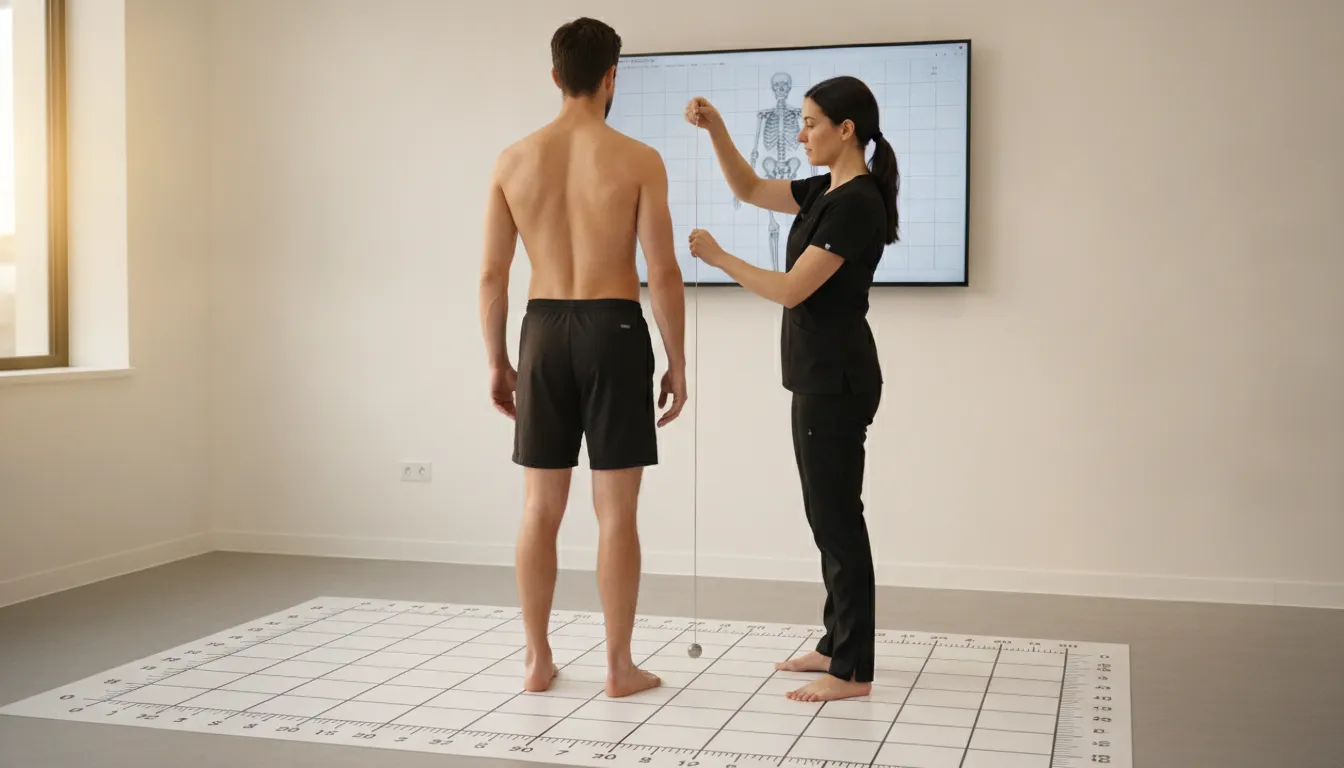
A movement assessment may look at comfortable range, posture, coordination, and how you perform a task that has become difficult. The clinician should explain the purpose of each part of the assessment and invite you to report discomfort or concern. The goal is to gather useful information and decide on appropriate next steps, not to force a movement or promise a particular outcome.
It can also help to define a practical goal. For example, you might want to sit through a work meeting more comfortably, return to a usual walking route, or manage getting in and out of a car. A clear goal gives you and the clinician a concrete way to review progress over time. It also keeps the conversation connected to everyday function rather than a vague expectation that every sensation should change at once.
Before hands-on care is discussed, share relevant health details and ask about options that match your preferences. You can ask the clinician to describe the proposed approach, explain its intended role, and outline alternatives. Consent and comfort matter throughout the visit; you can ask to pause or revisit a choice if you have questions.
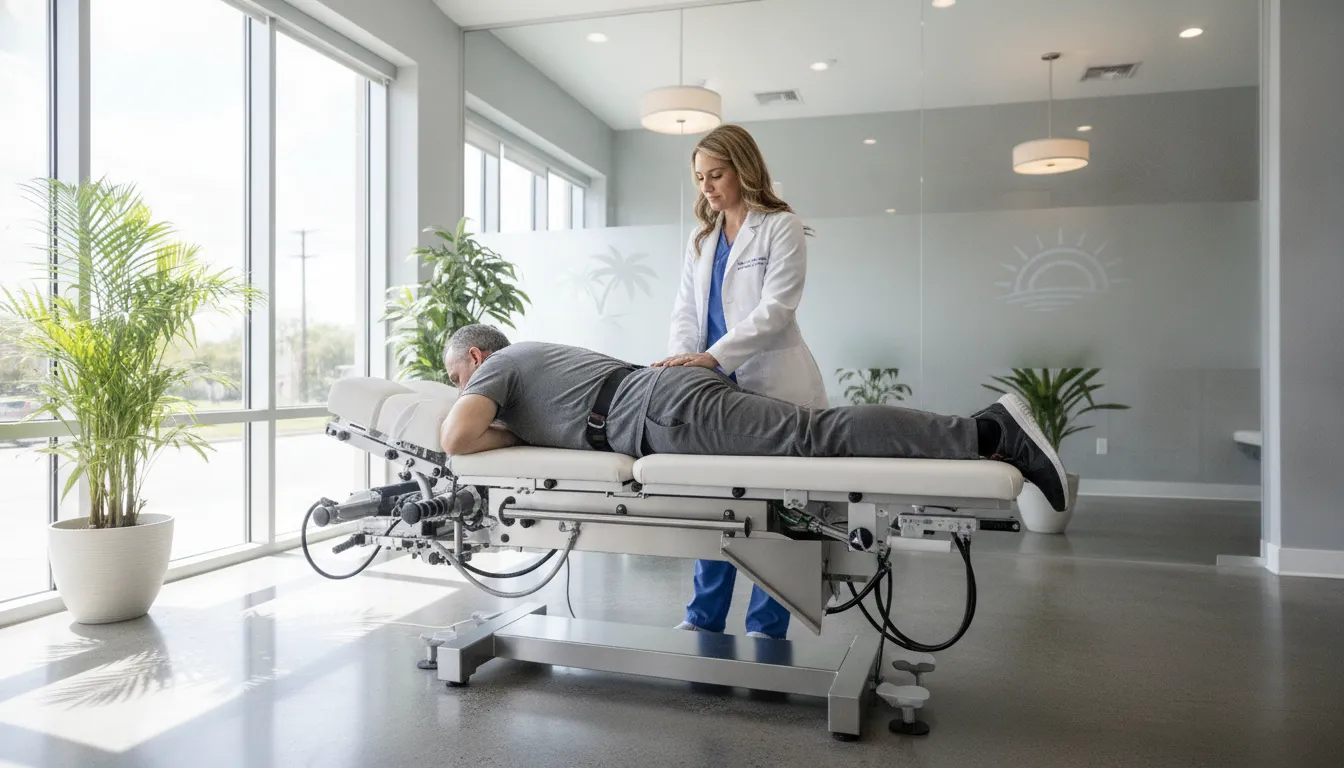
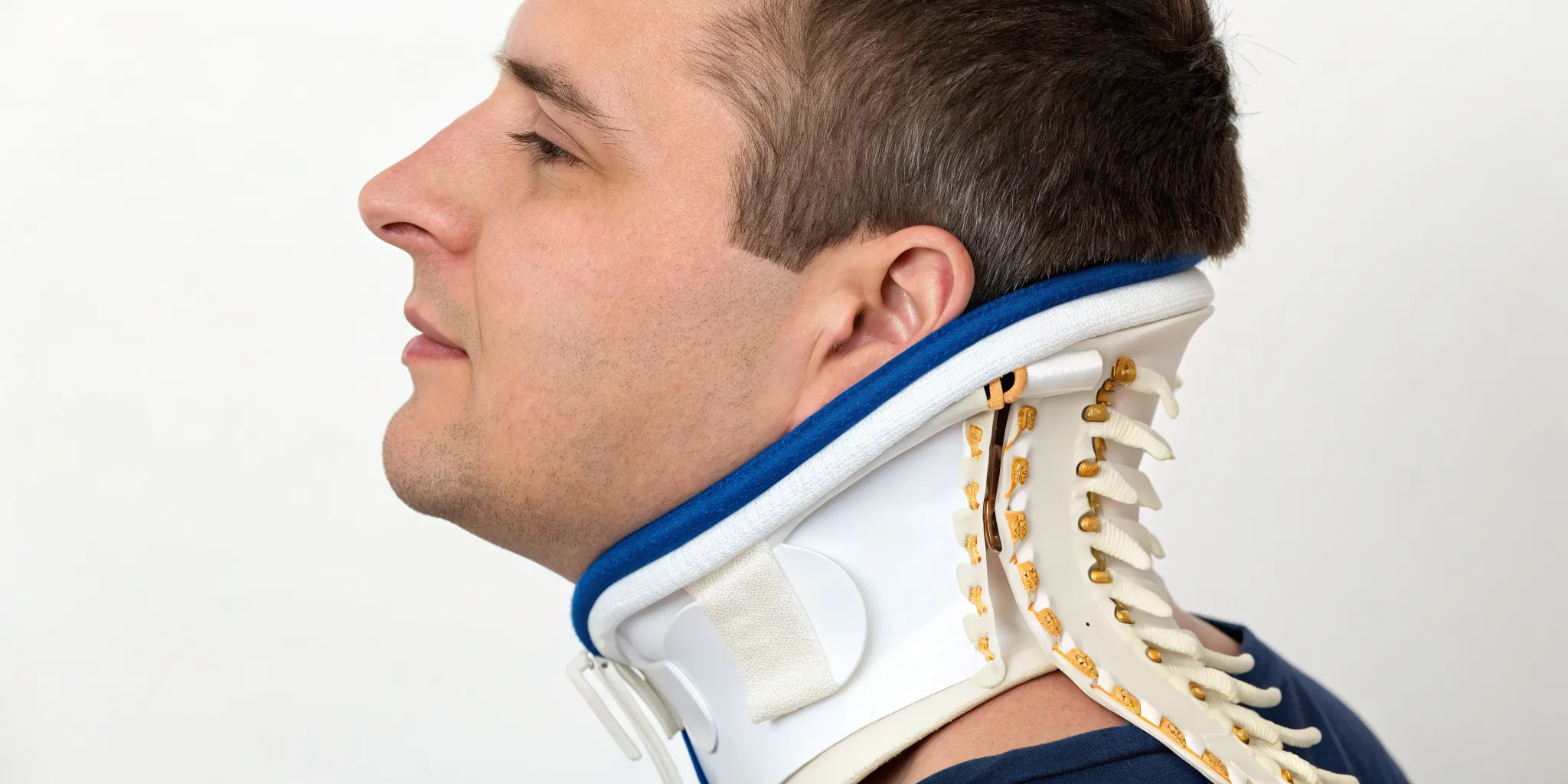
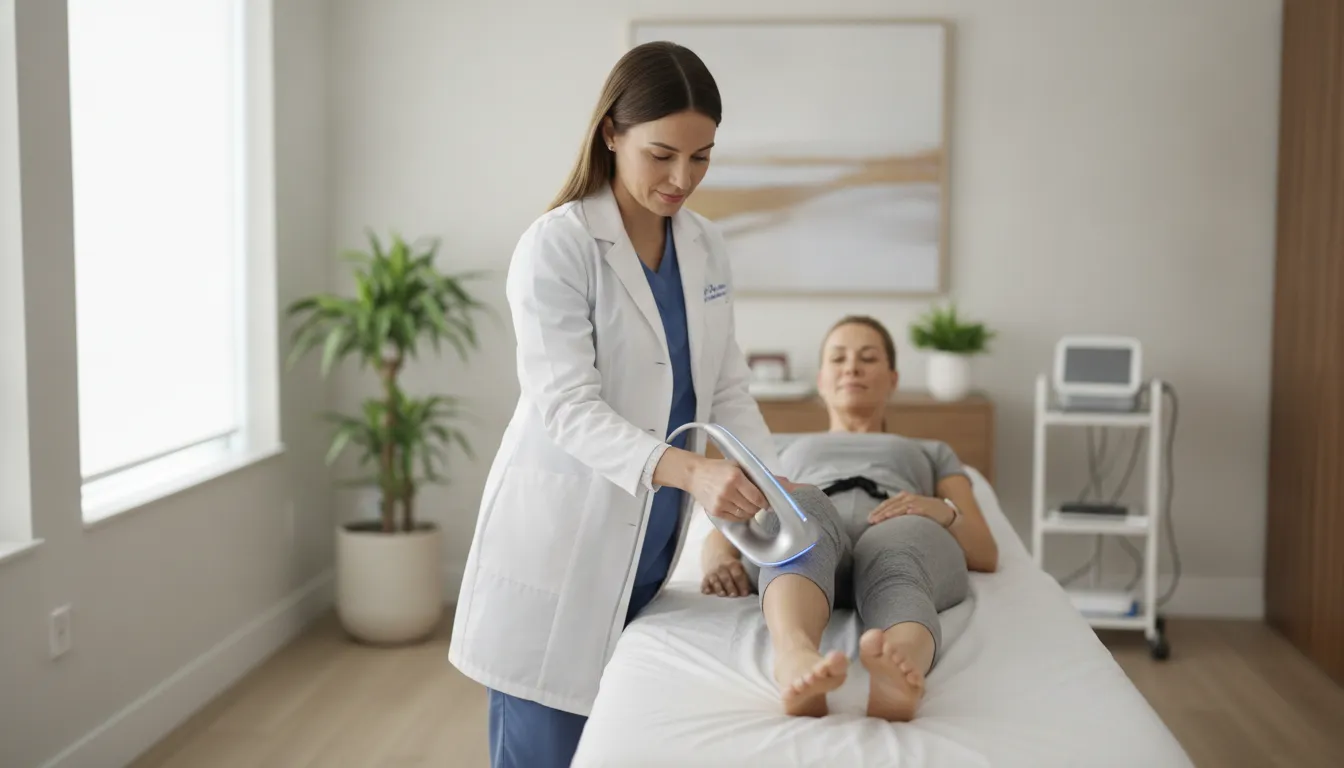
Ascend's Physical Medicine services include chiropractic care, decompression, lumbar care, corrective care, and soft-tissue approaches. A consultation can help determine whether an available service matches your evaluation and priorities. Learn about spinal decompression therapy as a separate option to discuss when appropriate; it is not interchangeable with manual therapy.
How do hands-on care and other options differ?
Care options differ in what the clinician does, which question an approach may address, and how it fits an overall plan. An evaluation helps compare possibilities without treating any one option as right for everyone.
The table below is a discussion guide, not a prescription. The names describe broad categories, and the details depend on the clinician's findings, your preferences, and the care setting.
| Care component | What it may involve | Question to discuss |
|---|---|---|
| Manual therapy | Clinician-applied joint or soft-tissue techniques | Which finding or goal would this approach address? |
| Movement guidance | Review of comfortable movement and activity goals | Which daily task should we use to track change? |
| Chiropractic or corrective care | Physical Medicine approaches selected after assessment | How does this fit the evaluation and my preferences? |
| Spinal decompression | A distinct physical care option that may be considered in selected situations | Why might this option be relevant to my presentation? |
| Further clinical input | Additional assessment or coordination when indicated | Which information or next step would clarify the plan? |
These approaches are not competing guarantees. A clinician may recommend one component, combine compatible components, or decide that another type of evaluation is a better next step. Ask how each recommendation relates to your findings and whether there are reasons to pause, modify, or reconsider it.
Manual therapy is most useful to consider as part of a clear clinical conversation. Ask what the clinician hopes to learn or address with the approach, how it relates to a functional goal, and which signs would lead to changing the plan. It is reasonable to discuss comfort, consent, and alternatives before any hands-on technique begins. You can also ask how the clinician will check your response and when the plan will be reviewed. Those questions keep care collaborative and make its purpose easier to understand.
People can respond differently even when they describe similar symptoms. Symptom history, movement, health background, and daily demands all shape clinical decisions. For that reason, a general article or a study summary cannot replace an assessment. If you are uncertain about a recommendation, ask the clinician to explain the reasoning in plain language and how the approach fits your goals. A thoughtful plan should leave room to reassess as new information becomes available.
Research on manual therapy often studies different techniques, patient groups, and care plans. A review of manipulation and mobilization for chronic low back pain focuses on a different symptom timeline from a new episode, which limits direct comparison. The practical takeaway is to ask how the proposed approach fits the findings and functional goal being tracked, rather than treating a review result as a forecast for one person with recent symptoms.
How can recent symptoms shape care choices?
Recent symptoms call for an individualized discussion that accounts for timing, function, and the pattern you report. The word acute alone does not make manual therapy the default; the assessment and your preferences still guide whether it is considered.
Two people may describe a similar onset but have different day-to-day limitations. One person may notice discomfort while changing position after sitting. Another may be more concerned about lifting a light object or walking at a usual pace. These examples do not establish a diagnosis, but they show why clinicians ask about particular activities rather than relying only on a broad symptom label.
It is also helpful to distinguish a treatment technique from the larger plan. Hands-on care may be discussed as one element, while the plan may also include movement observation, activity guidance, follow-up, or another clinical opinion. Ask how the elements relate to one another and which goal each is intended to support. You should be able to describe the proposed next step in your own words before deciding whether it feels appropriate to you.
When a clinician recommends a technique, ask how they will judge whether it remains suitable. A useful answer may connect the approach to a finding from your visit, name the functional change you will revisit, and explain when the plan will be reconsidered. A plan can change as symptoms and function change; continuing one approach automatically is not the only option.
Current evidence includes varied manual methods and different symptom groups. A review of manipulation and mobilization for chronic low back pain concerns chronic symptoms, so its scope differs from a recent episode. Matching a source to the question matters: broad evidence can inform discussion, while a clinician applies it alongside an individual's history and examination.
How is progress reviewed during a care plan?
Progress is best reviewed against the goals and functional changes identified at the outset. A clinician can revisit symptoms, movement, and daily activities to decide whether the plan remains suitable or needs adjustment.
Consider noting a few specific observations before your visit: which routine feels limited, when the limitation tends to show up, and whether it is changing. This is not a self-diagnosis. It simply gives you concrete details to share, rather than relying on a broad label for the experience.
At follow-up, discuss what has changed and what has not. A useful review might include whether a particular movement feels different, whether a routine is easier to complete, and whether any new concern has appeared. If the expected progress is not occurring, that is a reason to revisit the assessment and consider an adjusted direction, not to assume that more of the same approach is automatically appropriate.
You can make the review more specific by comparing the same task across visits. For example, note whether sitting through a meeting, walking a familiar route, or getting into a vehicle feels different. Do not push through a task merely to create a comparison. Share your ordinary experience and let the clinician decide whether another assessment is useful.
Progress does not have to be reduced to a single score. A clinician may consider your report, movement tolerance, and daily function together. If one area changes while another does not, explain that difference. It can help refine the goal, clarify expectations, and prompt a discussion about whether the plan should continue, change, or pause.
For a broader look at Ascend's care model, explore the services overview or learn about the practice and its approach on the about page. These pages provide context about the practice; they do not replace a personal evaluation.
How can you prepare for a Tampa Bay consultation?
A little preparation can make a consultation more focused. Bring a concise account of what changed, the activities that matter most to you, and the questions you want answered.
- Describe when the symptoms began and how they have changed since then.
- Identify movements or daily activities that are currently difficult, without trying to provoke symptoms for the visit.
- Share relevant health history and any earlier episodes or evaluations.
- List your main questions, including which findings the clinician observed and why a particular option is being considered.
- Discuss your preferences, concerns, and the functional goals you hope to work toward.
- Bring a list of approaches already tried and how you responded, if that information is available to you.
You do not need a perfect timeline or specialized terminology. A short, honest description of the change and its effect on daily life can be more useful than trying to identify a cause yourself. If several details are hard to recall, write down the questions that matter most so you can return to them during the visit.
Ascend Functional Health serves the greater Tampa Bay area through an integrative approach organized around Physical Medicine, Functional Medicine, and Regenerative Medicine. For a recent low back concern, a consultation can focus on the physical assessment and care options relevant to your situation. The Tampa service-area page provides local practice information, and the frequently asked questions page may help you prepare for a conversation. You can also review the practice's health and care articles for general background.
Contact the practice if your symptoms are changing in a concerning way or you are unsure which type of clinician should assess them. A personalized conversation can help clarify appropriate next steps; no article can determine the cause of your symptoms.
Explore Physical Medicine care options
Frequently Asked Questions
These answers offer general context about manual therapy and assessment for a recent low back episode. An individual evaluation is needed to discuss personal care decisions.
Can manual therapy be part of care for a new episode of low back pain?
It may be considered as one component when the history and assessment support it. A clinician can explain the intended role, other options, and how the plan will be reviewed.
Does manual therapy always mean spinal manipulation?
No. Manual therapy is a broad term that can include different clinician-applied joint or soft-tissue approaches. Ask which approach is being proposed and why it may fit your findings.
How long does a recent episode last?
There is no single timeline that applies to everyone. Symptoms and functional changes vary, so a clinician can help interpret your pattern and determine whether the plan should be revisited.
How can I prepare for an appointment?
Bring a short symptom timeline, relevant health history, a description of affected activities, and questions about the assessment and options. These details can support a focused discussion.
Request a consultation in Tampa Bay
Manual therapy for acute low back pain is best considered within a thoughtful evaluation, with goals and progress reviewed over time. This content is educational and not medical advice; consult your clinician before acting on health information.