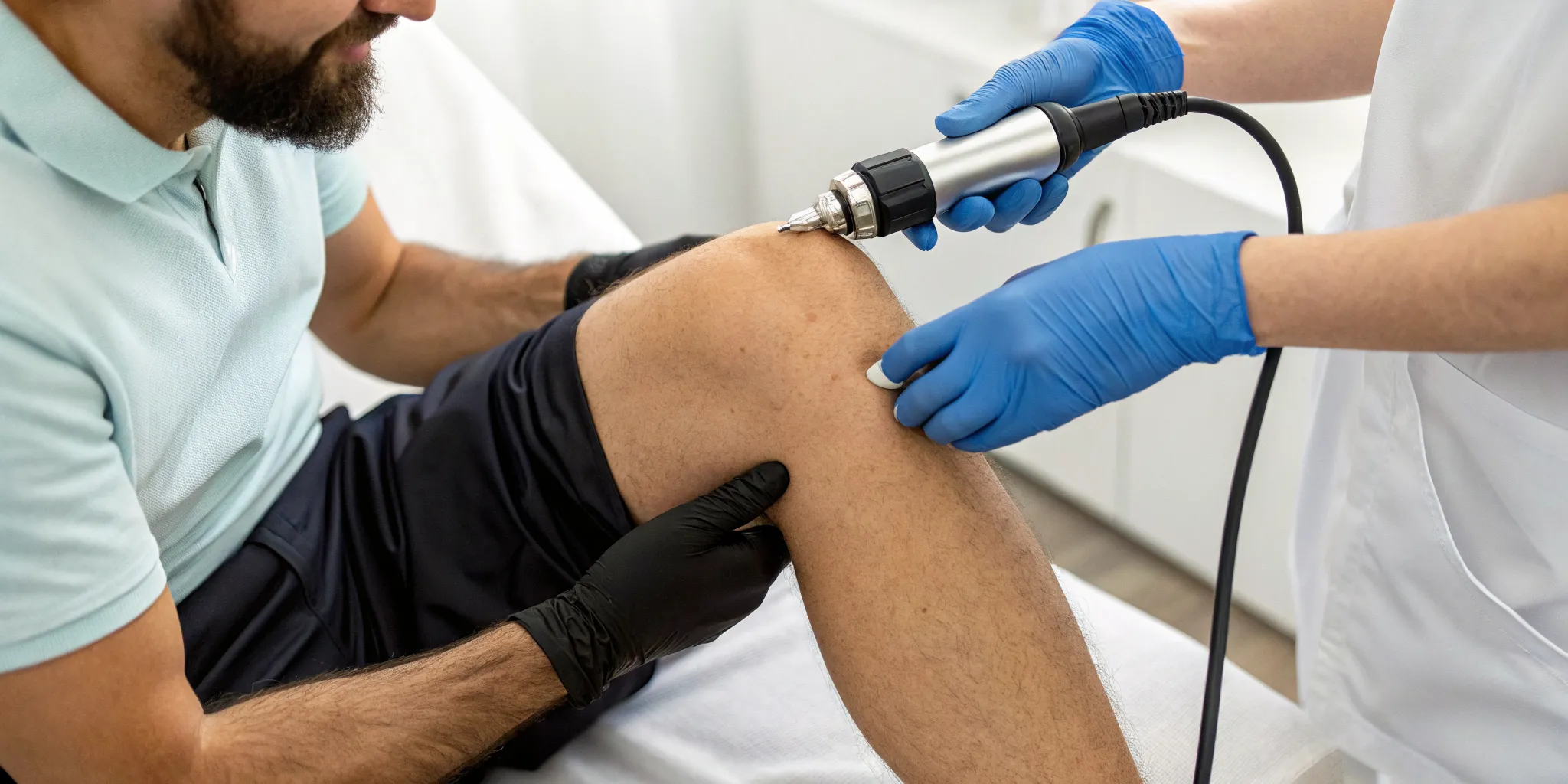
Men may explore peptide therapy for many reasons, from concerns about energy and recovery to broader health changes over time. Peptide therapy for men should begin with a careful review of goals, medical history, appropriate testing, and possible risks—not a promise of a particular result. A clinician-led conversation can help determine whether a specific approach fits your health picture.
Schedule a consultation to discuss your goals
Which goals should shape a conversation about peptide therapy for men?
Clear goals make the discussion more specific, but they do not establish that a peptide is appropriate. Describe the change you have noticed, when it began, and how it affects daily life.
Men may bring up energy, exercise recovery, sleep, body composition, or changes in how they feel over time. These are concerns to evaluate, not proof that a peptide is the answer. Similar symptoms can have different contributors, so a responsible process considers the full picture before discussing a protocol.
Make the concern observable. Rather than saying only “I feel off,” note when the change started, whether it is consistent, what makes it better or worse, and which daily activities are affected. A former athlete may care most about recovering after activity, while another person may focus on energy through a workday. These details help frame useful questions without assuming a cause.
Separate a hoped-for outcome from a measure that could be reviewed. “Feel more like myself” is meaningful, but it may need practical markers such as energy at a particular time of day or recovery after routine activity. Discuss which observations are realistic, how to record a baseline, and when to revisit them. Tracking should support a clinical conversation, not turn every fluctuation into a conclusion.
What should a clinician review before considering a protocol?
A clinician should first understand your health history, current concerns, relevant treatments, and the rationale for discussing a particular option. Testing should answer clinical questions rather than serve as a shortcut to a predetermined plan.
Expect a conversation about symptom timing, prior diagnoses, family history, sleep, daily routines, and previous testing. Share a complete list of prescriptions and other products you use, along with prior reactions or significant health events. Those details may change whether more evaluation is appropriate or whether a proposed approach should be avoided.
Testing may be useful when selected in context. A result should be interpreted alongside your history and symptoms; a single value does not automatically identify a cause or dictate a treatment. Ask which question each test is meant to answer, how a result could change the plan, and whether follow-up testing might be considered.
Ascend describes its care as personalized and focused on identifying contributors to health concerns. Its Functional Medicine approach can include concerns such as fatigue, bloodwork, and broader health patterns. A careful workup keeps the discussion centered on an individual rather than a general claim aimed at all men.
How do the options differ in purpose and evaluation?
Different care paths answer different questions. Use this comparison to discuss purpose, evaluation, and follow-up without treating the options as interchangeable.
| Care path | Main focus | What to clarify | Follow-up question |
|---|---|---|---|
| Peptide therapy discussion | Whether a specific approach fits an individual goal | Rationale, evidence, product source, risks, and alternatives | How will response and safety be reviewed? |
| Functional evaluation | Exploring potential contributors to symptoms and health patterns | History, relevant testing, and how findings relate to symptoms | What findings could change the care plan? |
| Physical Medicine | Movement and structural concerns, including chiropractic and related care | Examination findings and the reason for each recommended approach | Which measures will track functional change? |
| Continue evaluation first | Clarifying uncertainties or assessing a concern before treatment | What remains unknown and what next step is appropriate | When should the decision be revisited? |
This comparison is not a recommendation for one route. The appropriate path depends on the person, clinical question, and findings. Ascend's Physical Medicine services address movement and structural concerns, while Functional Medicine considers internal health patterns. Each has a distinct purpose and may be part of a broader evaluation when appropriate.
Which safety and quality questions are worth asking?
Ask about the specific purpose, supporting evidence, known risks, and limitations of the proposed peptide. Before deciding, clarify its source, oversight, and monitoring plan.
Peptides are not one uniform treatment. Different compounds can have different proposed uses, evidence, regulatory status, and safety considerations. Avoid broad assurances that every product is safe or that one protocol suits every man. Ask the clinician to explain the reasoning for discussing a specific option for you and which reasonable alternatives exist.
- What clinical concern leads you to consider this particular peptide?
- What evidence applies to my stated goal, and which uncertainties remain?
- Where does the product come from, and what quality controls apply?
- Which side effects or interactions should I understand?
- How will we decide whether to continue, adjust, or stop?
- Which alternatives are available, including further evaluation without starting a protocol?
Ask for plain explanations rather than relying on a broad label such as “peptide therapy.” The name of a compound, intended purpose, proposed route, and length of use all matter to the discussion. If the rationale is unclear, ask the clinician to connect it to your history and the question being evaluated. You can also ask what would make the clinician recommend against that option. A balanced discussion includes reasons to wait, not only reasons to proceed.
The U.S. Food and Drug Administration provides information about drug compounding and FDA oversight. This resource offers context for questions about product source and regulatory considerations; it does not determine whether treatment suits a particular person. A clinician should explain how these issues apply to the option under discussion.
How should progress and follow-up be handled?
A thoughtful plan sets expectations before care begins: which measures will be reviewed, when they will be checked, and which findings could prompt a change. Follow-up should address both the intended goal and possible unwanted effects.
Agree on a practical baseline. Depending on the concern, this could include symptom patterns, daily function, relevant examination findings, or selected lab measures. Not every measure fits every person. Tie tracking to the clinical question instead of collecting information without a clear purpose.
Discuss timing and communication in advance. Ask who to contact with concerns, how changes will be assessed, and what could lead the clinician to pause or revise the plan. A lack of expected change is useful information. It should prompt reassessment rather than automatic escalation.
For example, if the original concern is feeling depleted late in the day, agree on how often to note that pattern and what else to record, such as sleep disruption or changes in routine. If the concern is recovery after ordinary activity, describe the activity and the time it takes to feel back to baseline. These notes are not proof that a protocol caused a change; they give the clinician a clearer comparison with your starting point.
Ask what follow-up is planned before agreeing to any approach. Clarify whether evaluation will include a conversation, examination, or specific tests, and who will review the findings. A useful plan identifies a time to reassess and criteria for stopping or changing course. It should also make clear how to raise a concern between planned visits. If those details are missing, ask for them before moving forward.
Ascend's peptide therapy page describes the practice's service. Use a consultation to discuss how that process relates to your history and goals; a general service description cannot predict an individual outcome.
How can you prepare for a consultation in Tampa Bay?
Bring a concise account of your concern, relevant history, and questions about benefits, limits, and monitoring. Preparation helps keep the discussion focused on fit and next steps rather than a one-size-fits-all promise.
Before the visit, write down when symptoms began, what has changed, and what you hope to improve. Bring available test results and a list of prescriptions and other products you use. Note prior approaches and what happened with each. If your goal involves feeling capable and active again, explain which parts of that experience matter most.
Use the appointment to understand the reasoning behind recommendations. Ask which possibilities the evaluation supports, what remains uncertain, which testing is proposed, and how each finding could affect the decision. You can take time to consider a plan and request clarification before proceeding.
A short preparation sheet can keep the conversation focused. Include three parts: your main concern in one sentence; a brief timeline of changes and prior evaluations; and the questions you most need answered. For example, a former athlete might note that ordinary activity now requires more recovery time, when that shift began, and whether sleep or energy changed at the same time. The point is not to self-diagnose, but to help the clinician see the pattern you are noticing.
For context on the practice, read about Ascend's health services, its care philosophy, and its frequently asked questions. These pages can help you prepare, while an individual consultation is where fit and next steps can be discussed.
Explore questions about peptide safety and consultation planning for additional context. For the audience addressed here, review Ascend's page on men's peptide therapy.
Consider sorting your questions into “before,” “during,” and “after” the decision. Before, ask what concern warrants evaluation and what else might explain it. During, ask how findings support or weaken the proposed rationale, and what uncertainties remain. After, ask how response and unwanted effects will be monitored, when the next review occurs, and what findings would change the plan. This sequence helps avoid treating the first appointment as a commitment to a specific protocol.
Ascend organizes care across Physical Medicine, Functional Medicine, and Regenerative Medicine. The relevant starting point depends on whether your concern centers on movement, broader health patterns, or a specific regenerative option. You can ask how a clinician would distinguish among those questions and whether one or more should be evaluated first. The goal is a clear, individualized rationale, not a preset route.
Explore Physical Medicine care options
Frequently Asked Questions
These answers offer general guidance; a clinician can discuss how individual history and goals affect a decision.
Is peptide therapy appropriate for every man?
No. Suitability depends on the specific approach, a person's history and health concerns, and clinical evaluation. A consultation may conclude that further assessment or another care path is more appropriate.
Does a particular goal mean a peptide will produce that result?
No. A goal guides discussion but cannot guarantee a response. Ask which evidence applies to your situation, what remains uncertain, and how progress and safety would be reviewed.
Could testing be part of the discussion?
Testing may be considered when it addresses a relevant clinical question. Ask why each test is recommended and how its result could influence the plan. Interpret results in context.
Which questions should I ask about product source and safety?
Ask about source and quality controls, known risks, possible interactions, regulatory considerations, and monitoring. The clinician should address the specific option rather than make broad claims about all peptides.
How do I discuss whether this service fits my needs?
Share your goals, history, and questions with a clinician. Ascend's contact page is a place to request a consultation and discuss an appropriate next step.
Talk with Ascend about your goals and next steps
This article is for educational purposes only and is not medical advice. Consult your clinician before making decisions about your health.