Let's talk about the bottom line. Integrating a new service into your practice needs to make financial sense. Shockwave therapy presents a unique opportunity to expand your cash-based services, attract new patients, and significantly improve clinical outcomes, all of which drive revenue. But the return on investment hinges on selecting the right machine from the start. A well-chosen device can pay for itself in months, while the wrong one can lead to frustration and subpar results. Finding the ideal shockwave therapy device for physical therapists means balancing initial cost with long-term value, reliability, and clinical effectiveness. This guide provides a practical breakdown of the costs, revenue potential, and key features to help you make a smart, profitable investment for your clinic.
Key Takeaways
- Select the right tool for the job: Your choice of a shockwave device should be based on the conditions you treat most often. Consider whether you need radial technology for superficial issues or focused technology for deeper problems, and always prioritize devices with proper safety clearances.
- Understand the full financial picture: When budgeting for a shockwave device, account for the initial purchase price as well as long-term costs like maintenance and replacement parts. A quality device can become a profitable part of your practice by expanding your services and generating patient referrals.
- Master the application for better results: The success of shockwave therapy is not just about the machine; it is about your expertise. Developing a solid patient screening process, knowing the contraindications, and skillfully customizing treatment settings are essential for achieving safe and effective outcomes.
An Introduction to Shockwave Therapy
If you’re looking for a non-invasive way to help your patients with chronic pain, shockwave therapy is a technology worth understanding. At its core, this treatment uses acoustic waves to target injured soft tissues. Think of it as a method that prompts the body to restart its own healing process. The device sends high-energy sound waves into the affected area, which increases blood circulation and metabolic activity. This stimulation helps break down scar tissue and encourages the regeneration of healthy cells, directly addressing the source of pain rather than just managing the symptoms.
This approach aligns perfectly with a holistic treatment model, as it empowers the body’s innate ability to repair itself. For practices centered on physical medicine, incorporating shockwave therapy can provide a powerful tool for treating stubborn musculoskeletal issues that haven't responded to traditional methods. It’s a way to offer patients a forward-thinking solution that promotes long-term healing. Before you can decide which device is right for your clinic, it’s helpful to understand the different types of shockwave technology and the conditions they treat most effectively.
Radial vs. Focused: What's the Difference?
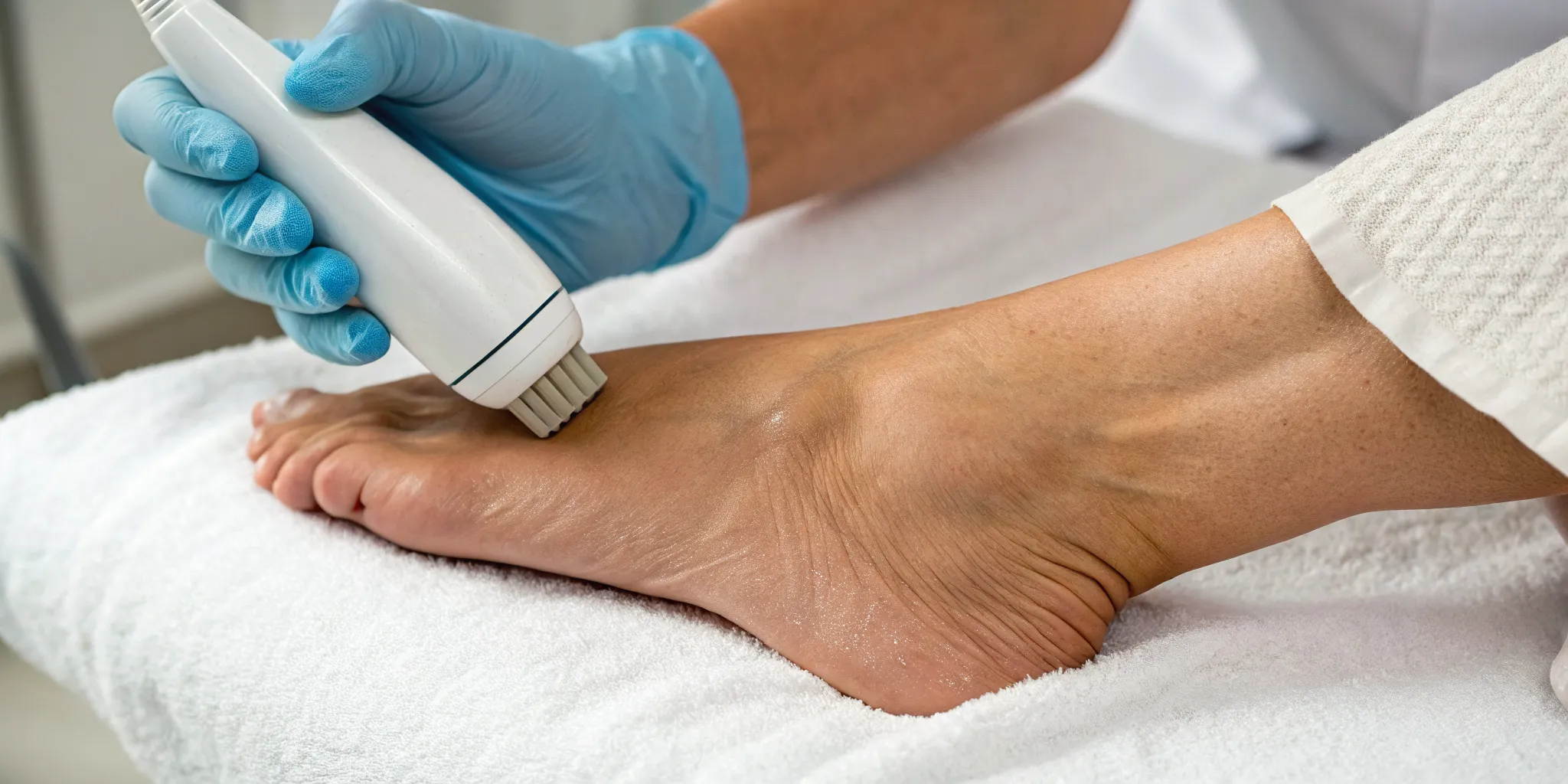
When exploring shockwave devices, you'll find two main types: radial and focused. The key difference lies in how the energy is delivered. Radial Shockwave Therapy (R-SWT) generates waves that spread out over a larger, more superficial area, much like ripples in a pond. This makes it highly effective for treating common conditions where the pain is spread over a broader region, such as plantar fasciitis or tennis elbow. The energy is most intense at the surface and dissipates as it goes deeper.
Focused Shockwave Therapy (F-SWT), on the other hand, concentrates its energy on a single, precise point. These waves can penetrate much deeper into the body, making them ideal for targeting specific, localized injuries in deeper tissues. Think of it as the difference between a floodlight and a spotlight.
Conditions That Respond to Treatment
One of the greatest strengths of shockwave therapy is its versatility. It has proven to be a reliable treatment for a wide array of chronic tendinopathies and musculoskeletal issues that can frustrate both patients and practitioners. By adding a shockwave device to your practice, you can expand the conditions you treat and provide lasting relief for your patients.
This therapy is particularly effective for:
- Plantar Fasciitis
- Achilles Tendinopathy
- Tennis Elbow (Lateral Epicondylitis)
- Jumper’s Knee (Patellar Tendinopathy)
- Calcific Tendonitis of the shoulder
- Myofascial trigger points
- Chronic muscle pain
For many of these conditions, shockwave therapy offers a compelling alternative to more invasive procedures, helping patients get back to their lives with less downtime.
Choosing the Right Shockwave Device for Your Practice
Adding a new modality to your practice is a significant decision, and choosing the right shockwave therapy device is an investment in both your clinic’s success and your patients' outcomes. The market is filled with options, each with different features, technologies, and price points. Making the right choice requires a clear understanding of your practice’s needs, the conditions you treat most often, and the specific goals you have for integrating this technology. A well-chosen device can become a cornerstone of your treatment offerings, helping you provide effective, non-invasive solutions for a range of musculoskeletal issues from chronic joint pain to tendinopathies.
To make an informed decision, you’ll want to look beyond the marketing materials and evaluate a few key factors. These include the device's safety certifications, its technical specifications like energy and frequency, the types of applicators it comes with, and its overall ease of use. Thinking through these elements will help you find a machine that not only delivers excellent clinical results but also fits seamlessly into your practice’s workflow. At Ascend Functional Health, we believe in using targeted, research-backed tools as part of our physical medicine services, and selecting the right equipment is the first step toward achieving lasting results for your patients.
Key Safety and Compliance Features
Patient safety should always be your top priority. When you're evaluating shockwave devices, it’s essential to distinguish between verified systems and unproven, risky machines. A reliable device will have the proper clearances and a documented history of safe, effective use. This not only protects your patients from potential harm but also safeguards your practice’s reputation. Look for devices that have been cleared by the FDA for specific indications, as this demonstrates a commitment to quality and regulatory standards. Investing in a verified system ensures you can deliver consistent, predictable outcomes and maintain the credibility of your care. You can learn to spot the red flags of risky devices to make a more confident choice.
Evaluating Energy and Frequency Specs
The effectiveness of shockwave therapy is directly tied to its technical specifications, particularly the energy it delivers. Think of the energy flux density (EFD) and pressure as the "dosage" of the treatment. Just as with any other therapeutic intervention, the right dose is critical for achieving the desired biological response. A device that allows you to precisely control these parameters gives you the flexibility to tailor treatments to specific conditions and individual patient needs. For example, a superficial tendon issue will require a different energy level than a deeper muscle trigger point. Understanding these best practices for shockwave therapy will help you use the device to its full potential.
Considering Applicators and Portability
Shockwave devices typically use either radial or focused applicators, and the type you need depends on the conditions you treat. Radial shockwaves produce a wider, more superficial energy pattern, making them highly effective for common issues like plantar fasciitis, tennis elbow, and Achilles tendinopathy. Focused waves, on the other hand, penetrate more deeply to target specific points with greater precision. Many practices find it beneficial to have a device with interchangeable applicators. You should also consider the practical aspects of the machine, like its size and portability. If you plan to use it in multiple treatment rooms, a compact, mobile unit will make your workflow much smoother.
Prioritizing Ease of Use and Customization
The most advanced device in the world won’t do you much good if it’s complicated and cumbersome to operate. The best shockwave therapy device for your practice is one that your team can use confidently and efficiently. Look for a machine with an intuitive interface, clear instructions, and perhaps even pre-set protocols for common conditions. At the same time, you’ll want the ability to create and save custom treatment plans for your patients. This combination of simplicity and customization allows you to deliver precise, personalized care while optimizing your time. A device that is easy to use ultimately lets you focus more on your patient and less on the equipment.
Debunking Common Shockwave Therapy Myths
Like any innovative health solution, shockwave therapy is surrounded by a few myths. It’s easy for misinformation to spread, especially when a treatment sounds as intense as "shockwave." But understanding what this therapy truly is (and isn’t) is the first step toward making an informed decision about your health. Let’s clear up some of the most common misconceptions.
Myth: It Only Treats a Few Conditions
Many people associate shockwave therapy with a handful of specific injuries, like plantar fasciitis or tennis elbow. While it’s fantastic for those issues, its application is much broader. This therapy is a versatile tool for a wide range of musculoskeletal problems, helping to stimulate healing in tendons, joints, and muscles that haven’t responded to other treatments.
At Ascend Functional Health, we use it to address many of the conditions we treat, from chronic shoulder pain to hamstring tendonitis. Research even points to its effectiveness in areas like sexual wellness. The goal is always to trigger your body’s natural repair mechanisms, making it a powerful option for many persistent health concerns.
Myth: All Devices Are the Same
It’s easy to assume that one shockwave machine is just like the next, but there’s a lot of advanced technology at play. The biggest difference lies in whether the device delivers radial or focused shockwaves. Radial waves spread out from the applicator, covering a wider, more superficial area. Think of them like ripples in a pond. They are excellent for larger muscle groups and general tissue stimulation.
Focused shockwaves, on the other hand, are generated differently to target a precise point deep within the body. This allows us to direct healing energy exactly where it’s needed most. The type of device we use is a key part of our physical medicine protocol, tailored to your specific condition and anatomy.
Myth: It's an Invasive Procedure
The name "shockwave" can be a bit misleading, making it sound like a painful or invasive process. In reality, shockwave therapy is completely non-invasive. There are no needles and no incisions. The treatment uses acoustic (sound) waves to create micro-trauma in the targeted tissue, which stimulates blood flow and kicks off your body’s natural healing cascade.
Most people describe the sensation as a strong, deep tapping or pulsing. While it can be intense over a particularly sore spot, it’s generally well-tolerated. It’s a fantastic alternative to more aggressive options, offering a way to address chronic pain by working with your body, not against it. Our comprehensive services are all designed around this principle of facilitating your body's innate ability to heal.
A Look at Leading Shockwave Device Brands
When you're ready to add shockwave therapy to your practice, you'll find a market full of options. Sifting through them can feel overwhelming, but a few brands consistently rise to the top. These industry leaders are known for their commitment to quality, innovation, and clinical effectiveness. Understanding what sets each one apart is the first step in choosing a device that aligns with your clinic’s needs and your patients' goals. At Ascend Functional Health, we believe in using advanced, research-backed tools as part of our Physical Medicine services to address the root cause of pain.
Choosing the right equipment is about more than just features; it's about investing in technology that supports your treatment philosophy and helps you deliver the best possible results. The top brands have earned their reputations by consistently producing reliable devices that practitioners trust. They also provide solid support and training, which are crucial for integrating a new modality into your practice smoothly. Here’s a look at some of the most respected names in shockwave technology and what makes their devices a worthy addition to a modern, patient-focused practice.
Storz Medical
Storz Medical, a Swiss manufacturer, has a strong reputation for producing high-quality and durable shockwave therapy devices. Known for their precision engineering, these machines are built to last, making them a solid long-term investment for any clinic. Their products often come with advanced features designed to improve treatment efficacy and overall patient comfort, which is a critical factor in patient-centered care. For practitioners who prioritize reliability and top-tier performance, Storz devices are frequently considered a gold standard. Their commitment to quality ensures that clinicians can deliver consistent and effective treatments, helping patients achieve their health goals.
EMS Electro Medical Systems
EMS Electro Medical Systems is another key player, celebrated for its versatile range of shockwave therapy devices. This versatility is a major advantage for practices that treat a wide variety of conditions, from acute injuries to chronic pain. Their equipment is engineered to provide effective solutions across this spectrum, often including multiple applicators and settings to tailor treatment to each patient's specific needs. This adaptability makes EMS a great choice for a holistic practice aiming to offer comprehensive care. By accommodating different conditions we treat, these devices empower practitioners to develop more personalized and effective protocols for their patients.
Zimmer EnPuls Pro
The Zimmer EnPuls Pro is a popular and trusted choice among practitioners, especially for its effective radial shockwave therapy capabilities. One of its biggest selling points is its user-friendly design, which allows for straightforward operation without a steep learning curve. This simplicity, combined with its reliable performance, has made it a staple in many busy physical therapy clinics. For practices where efficiency and ease of use are priorities, the EnPuls Pro delivers. It allows clinicians to perform treatments smoothly and consistently, ensuring that the focus remains on patient care rather than on complex equipment operation.
DJO Chattanooga Intelect RPW 2
The DJO Chattanooga Intelect RPW 2 stands out for its compact design and efficiency, making it an excellent option for busy therapists or clinics with limited space. Its smaller footprint doesn't compromise its power, as it’s designed for quick, effective treatments that fit seamlessly into a packed schedule. This functionality is ideal for practitioners who need to move equipment between treatment rooms or want a device that is easy to manage. The Intelect RPW 2 is recognized for its ability to deliver quality outcomes efficiently, helping clinics maintain a high standard of care while managing patient flow effectively.
BTL Industries
BTL Industries is widely recognized for its innovative approach to shockwave therapy. The company is dedicated to research and development, which means its devices often feature cutting-edge technology designed for a broad range of musculoskeletal conditions. This commitment ensures their products are at the forefront of therapy, incorporating the latest advancements to improve patient outcomes. For a practice that values staying current with the most effective treatment methods, BTL offers compelling solutions. Their focus on innovation aligns perfectly with a forward-thinking approach to patient care, ensuring that practitioners have access to some of the best shockwave therapy devices available.
Understanding the Investment: Device Cost Breakdown
When you’re ready to add a shockwave therapy device to your practice, one of the first questions you'll have is about the cost. The price of these machines can vary quite a bit, so it’s helpful to think of it as an investment in your clinic’s future and your patients' outcomes. The amount you invest will depend on your practice's size, patient volume, and the specific features you need to deliver excellent care. A device is more than just equipment; it's a tool that expands your physical medicine offerings and helps you address chronic conditions more effectively.
The price spectrum for shockwave devices ranges from a few thousand dollars for portable, entry-level units to tens of thousands for advanced systems used in high-volume clinics. Understanding what each tier offers helps you make a smart decision that aligns with your budget and clinical goals. It’s not just about finding the lowest price point, but about securing a reliable, effective machine that will serve your patients and your practice well for years to come. Let's break down the different tiers to give you a clearer picture of the financial commitment.
Entry-Level Systems
For practitioners just introducing shockwave therapy or those with smaller, boutique clinics, entry-level systems are a great starting point. These devices typically fall in the $2,000 to $5,000 range. While they may not have all the bells and whistles of more advanced models, they are often portable and provide the core functionality needed to perform effective treatments. These systems are a practical way to begin offering this service, allowing you to build experience and demonstrate its value to your patients before committing to a larger investment. They get the job done for common conditions and can generate a positive return relatively quickly.
Mid-Range Options
The mid-range category, with prices from approximately $7,000 to $18,000, represents the sweet spot for most established private practices. These machines offer a significant step up in performance and durability. They are typically built with stronger air compressors, which allows for more consistent energy output during treatments. This consistency is key for achieving predictable and positive patient outcomes. Brands in this tier have a proven track record for reliability, making them a dependable workhorse for a busy clinic. If you have a steady stream of patients who could benefit from shockwave therapy, a mid-range device is often the most logical and cost-effective choice.
Advanced, High-End Devices
At the top of the spectrum are the premium, high-end devices, which can range from $25,000 to over $45,000. These are the systems you’ll find in leading sports medicine clinics and hospital settings. The higher price tag reflects superior engineering, extensive clinical research backing the technology, and exceptional customer support. Manufacturers of these devices often provide benefits like rapid repairs and loaner machines to ensure your practice never experiences downtime. For a high-volume clinic that positions itself as a leader in cutting-edge treatments, investing in a premium device from a top brand can be a powerful differentiator.
Don't Forget These Additional Costs
The initial purchase price of the device is only part of the total investment. To create an accurate budget, you also need to account for ongoing operational costs. The handpiece contains a projectile, or "bullet," that wears out over time. These typically need to be replaced after one to two million shocks, with a replacement kit costing between $150 and $600. Additionally, the handpiece itself may require servicing or a full replacement every three to five years, which can cost anywhere from $1,500 to $3,000. Factoring in these consumables and maintenance expenses from the start will give you a more realistic understanding of the long-term financial picture.
Radial vs. Focused: Which Is More Effective?
When discussing shockwave therapy, the conversation often turns to a key question: which type is better, radial or focused? The truth is, it’s not about one being superior to the other. Instead, it’s about understanding their distinct mechanisms and knowing which one to apply for a specific patient and condition. Think of them as two different tools in your toolkit, each designed for a unique job. Choosing the right one is fundamental to delivering effective care and achieving the best possible outcomes for your patients.
Radial shockwave therapy delivers energy that spreads out over a wider, more superficial area. Focused shockwave therapy, on the other hand, concentrates its energy on a single, deeper point. A comprehensive practice that offers a range of physical medicine solutions may find value in having access to both technologies. By understanding the core differences, you can make an informed decision about which device best suits your clinic’s needs and your patients’ most common complaints. The goal is always to match the technology to the therapeutic goal, ensuring a precise and effective treatment plan. Both modalities stimulate the body's natural healing processes, but they do so in very different ways. Getting this choice right from the start sets the stage for a successful treatment course and a satisfied patient who sees real results.
When to Use Radial Shockwave Therapy
Radial shockwave therapy is your go-to for treating conditions that are more superficial. The pressure waves are generated and then spread out radially from the applicator tip, meaning the energy is most concentrated at the surface and dissipates as it goes deeper. This "wide and shallow" energy distribution is highly effective for common issues affecting tissues closer to the skin.
Consider using radial shockwaves for conditions like plantar fasciitis, tennis elbow, and Achilles or patellar tendinopathies. Because the energy covers a larger treatment area, it’s ideal for addressing pain and dysfunction in these broader regions. Some experts even suggest calling it radial pressure wave therapy, as the waves have different physical properties than "true" focused shockwaves, but their clinical effectiveness for superficial conditions is well-established.
The Best Applications for Focused Shockwave
In contrast, focused shockwave therapy is designed for precision and depth. This technology generates waves that converge at a specific point deep within the body, allowing you to target tissues that radial waves can't reach. The pressure is highest at this focal point, creating a powerful therapeutic effect exactly where it's needed most. This makes it an invaluable tool for addressing more complex or deep-seated issues.
Focused shockwave is particularly useful for chronic tendinopathies that haven't responded to other treatments, calcific tendonitis of the shoulder, and deeper trigger points. Because the pressure waves can be aimed with such accuracy, you can treat the core of the problem without affecting a large area of surrounding healthy tissue. This targeted approach is a cornerstone of addressing the root cause of many musculoskeletal conditions.
Factors Influencing Patient Outcomes
Simply choosing between radial and focused shockwave isn't enough to guarantee success. Several other factors play a critical role in patient outcomes. First and foremost is proper patient selection. A thorough initial assessment is essential to confirm that shockwave therapy is the right modality for the individual’s specific condition and that there are no contraindications.
Beyond that, the skill of the practitioner is paramount. The treatment "dosage," which includes the energy level and the number of pulses, must be carefully calibrated. This is not a one-size-fits-all therapy; the protocol should be adjusted based on the patient's condition, tissue depth, and tolerance. Close monitoring and a personalized approach are key to ensuring both the safety and effectiveness of the treatment, helping you guide your patients toward lasting relief.
Key Safety Protocols and Contraindications
Integrating any new modality into your practice requires a deep commitment to patient safety. While shockwave therapy is an incredibly effective tool, its power comes with responsibility. A well-structured protocol not only protects your patients but also builds trust and credibility for your clinic. It all starts with knowing who is a good candidate for treatment and, just as importantly, who is not. This diligence forms the foundation of a successful and ethical practice, ensuring you can confidently apply this technology for the best possible results. By establishing clear guidelines from the outset, you create a safe environment that allows for optimal healing and reinforces your reputation as a careful and knowledgeable practitioner.
Absolute Contraindications to Know
Understanding when not to use shockwave therapy is just as important as knowing when to use it. Patient safety must always be the top priority. Before beginning any treatment, a thorough screening for contraindications is essential. These are situations where shockwave therapy should not be performed under any circumstances.
Key contraindications include:
- Treatment over or near a malignant tumor
- Application on pregnant patients
- Use on areas with active infections
- Treatment over open growth plates in children or adolescents
- Application near implanted devices like pacemakers
- Patients with blood clotting disorders or on anticoagulant therapy
Carefully documenting this screening process is a critical part of providing responsible physical medicine and protecting both the patient and your practice.
Setting Patient Expectations for Treatment
Clear communication is the cornerstone of a positive patient experience. It’s important to explain that shockwave therapy is a non-invasive treatment for those struggling with chronic pain that hasn’t responded to other methods. Let them know that the process itself is not painful, though it can be mildly uncomfortable. Encourage them to provide feedback during the session so you can adjust the intensity for their comfort.
You should also frame the treatment as a process, not a single event. Explain that most conditions we treat require a series of sessions to achieve lasting results. Managing expectations about the timeline for improvement helps build trust and encourages patients to stick with their treatment plan, leading to better long-term outcomes.
Creating Your Patient Screening Protocol
A thorough patient assessment is crucial to the success of shockwave therapy. Your screening protocol should be a systematic process that ensures you have a complete picture of the patient's health before proceeding. Before recommending this therapy, it is essential to fully evaluate each patient’s medical history, current condition, and any potential risk factors. This goes beyond simply checking for contraindications.
Your protocol should include a detailed health history review, a hands-on physical examination of the affected area, and a clear discussion about the patient’s goals. This comprehensive approach, similar to the principles of functional medicine, ensures that shockwave therapy is the right choice and is integrated thoughtfully into their overall care plan. This detailed evaluation allows you to create a personalized and effective treatment strategy.
Calculating the ROI for Your Clinic
Bringing a new piece of equipment into your practice is a significant decision, and the financial aspect is a huge part of that. When you're looking at shockwave therapy, it's helpful to think of it not just as an expense, but as an investment in your patients' outcomes and your clinic's growth. A quality device can offer a substantial return by expanding your treatment options and attracting new patients. Let's break down what that return on investment could look like for your practice, from direct revenue to the long-term value of patient loyalty.
Breaking Down Revenue Potential
This is where the numbers get exciting. Shockwave therapy can pay for itself surprisingly quickly. For example, a mid-range device might have an initial cost of around $15,000. If you treat just five patients a week with this modality, you could recoup your entire investment in about six months. Many clinics offer shockwave therapy as a cash-based service, which simplifies the billing process and provides a steady, predictable revenue stream. By adding these kinds of advanced physical medicine services, you create more value for your patients while also building a more resilient and profitable practice. It's a clear path to growing your clinic's financial health.
The Impact on Patient Retention and Referrals
Beyond the direct revenue, think about the long-term value. When you provide a solution that effectively addresses stubborn, chronic pain, you build incredible trust and loyalty. Patients who finally find relief at your clinic are more likely to stick with you for their long-term health goals. These positive patient outcomes often turn happy patients into your most powerful advocates. They’ll share their success stories with friends and family, generating word-of-mouth referrals that bring new people to your door. Offering specialized treatments like shockwave therapy also positions your clinic as a go-to destination for people actively seeking solutions for persistent pain, helping you stand out in your community.
Considering Financing, Warranties, and Support
The initial price tag of a device is only one part of the equation. To make a truly smart investment, you need to look at the total cost of ownership. This includes ongoing expenses for consumables, maintenance, and any potential repairs. Choosing a device from a reputable brand is essential for ensuring reliability, safety, and consistent results. These established companies typically offer solid warranties and responsive customer support, which are invaluable if you run into any issues. Making a choice based on quality aligns with our commitment to research-backed protocols and ensures you're providing the safest, most effective care for your patients while protecting your investment for years to come.
Integrating Shockwave Therapy into a Holistic Practice
At a practice that looks at the whole person, every treatment is a piece of a larger puzzle. Integrating shockwave therapy isn't about adding another gadget; it's about enhancing our ability to address the root cause of pain and dysfunction. This technology fits seamlessly into a holistic model because it empowers the body's own healing mechanisms, which is the cornerstone of both functional and physical medicine. Instead of just masking symptoms, shockwave therapy initiates a healing response at the cellular level, making it a powerful tool for lasting recovery.
This approach allows us to create more comprehensive and effective treatment plans. For instance, while we use our Physical Medicine protocols to apply shockwave therapy directly to an injured tendon, our functional medicine team can investigate the underlying inflammation that contributed to the injury in the first place. This dual strategy of treating both the symptom and its source is what sets a holistic practice apart. Shockwave therapy offers a proven, non-invasive alternative for many musculoskeletal issues, helping patients find relief and facilitate healing without more aggressive interventions.
Ultimately, adding a service like shockwave therapy is about getting better results for our patients. Many people arrive at our clinic feeling frustrated after conventional treatments have failed to resolve their chronic pain. For these individuals, shockwave therapy can be a game-changer. It’s an extremely effective and safe option for many of the stubborn conditions we treat, especially for active people struggling with pain from old injuries. The key is applying it correctly. A core part of our philosophy involves careful and thorough patient evaluation to ensure any treatment we recommend is the right fit for that individual's unique health situation. Proper patient selection is crucial for achieving the best outcomes.
Related Articles
- SoftWave Tissue Regeneration Therapy in Tampa | Alessi Functional Health
- SoftWave TRT Therapy in Tampa, FL - Alessi Functional Health
- Regenerative Medicine for Pain Recovery | Ascend Functional Health
- What Is Soft Tissue Therapy? A Complete Guide
- Is Myofascial Release Legitimate? What Science Says
Frequently Asked Questions
What does shockwave therapy actually feel like? The name can sound intense, but the treatment itself is completely non-invasive, meaning no needles or incisions are involved. Most people describe the sensation as a strong, deep tapping or pulsing on the skin. While you might feel some discomfort when the applicator passes over a particularly sore spot, the intensity is always adjusted to your tolerance. The goal is to stimulate healing, not to cause pain.
How many treatments are usually needed to feel better? Shockwave therapy is a process that encourages your body to heal over time, so it’s not a one-time fix. The exact number of sessions depends on your specific condition, how long you’ve had it, and how your body responds. Generally, a treatment plan involves a series of appointments scheduled over several weeks. We create a personalized plan for you after a thorough assessment and will be able to give you a much clearer timeline then.
What kinds of conditions does this therapy work best for? This therapy is incredibly versatile and is most effective for chronic musculoskeletal issues that haven't improved with other methods. It’s a fantastic solution for stubborn tendon problems like plantar fasciitis, tennis elbow, and Achilles tendinopathy. We also use it to address chronic muscle pain, shoulder tendonitis, and trigger points that contribute to persistent discomfort and limit your movement.
Is shockwave therapy a safe option for chronic pain? Yes, it is a very safe treatment when performed by a trained practitioner on a suitable candidate. Your safety is our first priority, which is why we conduct a comprehensive health screening before beginning any treatment. This therapy is not appropriate in certain situations, for example, during pregnancy or over areas with active infection. Our detailed evaluation ensures that shockwave therapy is the right and safest choice for your specific health situation.
Why do you use different types of shockwave devices? Think of it like having different tools for different jobs. Some conditions require a broader, more superficial energy wave that spreads out to treat a larger area, which is what a radial device does. Other issues, like a deep tendon injury, need a precise, focused beam of energy to target the exact source of the problem. Having access to both technologies allows us to tailor the treatment with incredible accuracy, ensuring we are using the most effective approach for your body and your condition.